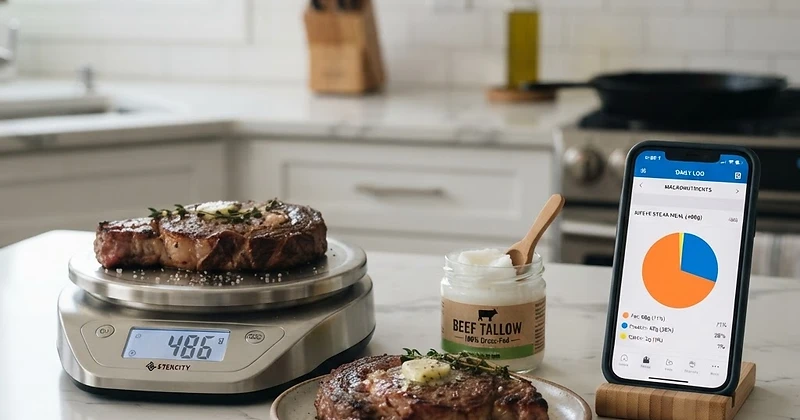
Discover the top fat-to-protein ratio calculators and dedicated apps to dial in your Lion Diet macros, avoid protein toxicity, and sustain fat adaptation.
We only share products we believe in. Buying through a link may earn us a small commission — thanks for the support. Learn more →
The Lion Diet—an ultra-strict elimination protocol consisting solely of ruminant meat (typically beef, lamb, or bison), salt, and water—strips nutrition down to its absolute essentials. By eliminating dairy, eggs, poultry, pork, plant matter, and food additives, it serves as the ultimate metabolic reset and therapeutic elimination tool for those battling autoimmune disorders, severe gut dysbiosis, and chronic inflammation.
However, the simplicity of the ingredient list introduces a distinct physiological challenge: getting your fat-to-protein ratio right. When carbohydrates are zero, your body relies almost entirely on dietary fat for fuel. Eating cuts of meat that are too lean leads rapidly to lethargy, digestive distress, and the metabolic pitfall traditionally known as "rabbit starvation." To succeed, utilizing a specialized lion diet macro calculator or keto meat calculator and pairing it with the right tracking platform is critical.
Understanding the Ideal Fat-to-Protein Ratio on the Lion Diet
In standard low-carb spheres, macronutrients are calculated across carbohydrates, fats, and proteins. On the Lion Diet, carbohydrates are fundamentally zero. Your energy balance is determined entirely by the relationship between fat and protein.
Grams vs. Calories: Avoiding the Common Confusion
A frequent error among beginners is mixing up ratios by weight versus ratios by caloric density:
- Caloric Ratio: Fat supplies 9 calories per gram, whereas protein delivers 4 calories per gram. For therapeutic ketosis and steady energy, most carnivore and Lion Diet practitioners target between 70% to 80% of total calories from fat, with the remaining 20% to 30% coming from protein.
- Gram-for-Gram Ratio (Weight): A 1:1 ratio in grams (e.g., 150g fat to 150g protein) equates to roughly 69% of calories from fat and 31% from protein. A ketogenic carnivore target of 1.5:1 or 2:1 by weight shifts your caloric intake closer to 77%–82% fat, which is often necessary for those managing neurological symptoms or severe insulin resistance.
If you fail to consume enough fat, your liver must convert excess amino acids into glucose via gluconeogenesis, leaving you feeling fatigued, ungrounded, and prone to constipation or intense cravings.
Top Dedicated Calculators for Lion and Carnivore Macros
Standard macronutrient calculators assume a base of carbohydrates and recommend lean chicken breasts or protein powders. To dial in ruminant-only eating, turn to calculators tailored to zero-carb biology.
1. AI-MealPlan Carnivore Diet Calculator
The Carnivore Diet Macro Calculator by AI-MealPlan uses the Katch-McArdle equation to estimate your caloric and macronutrient baseline using lean body mass. It features presets specifically designed for carnivore weight loss, maintenance, muscle gain, and autoimmune healing. It provides target ranges in both pounds of ruminant meat per day (typically 1.5 to 2.5 lbs) and exact fat-to-protein caloric splits.
2. TDEE Hub Carnivore Macro Calculator
The Carnivore Macro Calculator on TDEE Hub provides instant, zero-signup calculations. It automatically locks carbohydrates to zero grams, sets a protein baseline suited to your body weight (typically 0.8g to 1.0g per pound of body mass), and allocates remaining caloric needs entirely to fat. This gives you a clear blueprint for your daily beef and tallow consumption.
3. GoCarnivore Diet Macro Calculator
Another accessible web-based option is the GoCarnivore Macro Calculator. It allows users to set custom therapeutic ratios—such as a 75/25 or 80/20 fat-to-protein split—which simplifies meal prep when ordering specific primal cuts or buying suet from local butchers.
The Best Tracking Apps for the Lion Diet
Most mainstream diet tracking applications trigger constant "high saturated fat" or "low fiber" warnings, cluttering your interface. When looking for a lion diet tracking app, you want tools that display fat-to-protein ratios clearly and maintain clean ruminant meat databases.
1. Vore: Carnivore Diet Tracker
Unlike general health apps, Vore is built exclusively for zero-carb, meat-based, and Lion Diet protocols. Key features include:
- Dedicated protein-to-fat ratio tracking on the primary dashboard.
- AI photo and voice logging tailored to animal cuts (e.g., distinguishing between an untrimmed ribeye, brisket point, and 73/27 ground beef).
- Biomarker and digestive symptom tracking, crucial for elimination diets.
- Zero annoying alerts regarding sodium, cholesterol, or fiber deficits.
2. Cronometer (Gold Edition)
Cronometer remains the gold standard for clinical data integrity. It pulls from the NCCDB and USDA databases rather than unverified user submissions, meaning fatty acid and amino acid profiles are scientifically accurate. With Cronometer Gold, you can set custom macronutrient targets to track calories strictly as a fat to protein ratio carnivore split (e.g., 75% fat / 25% protein) while tracking your sodium and potassium intake in real time.
3. MyFitnessPal (With Custom Adjustments)
While usable due to its vast library, MyFitnessPal requires manual customization: disable carbohydrate tracking, ignore warnings regarding daily saturated fat thresholds, and manually enter verified nutritional data for raw versus cooked beef tallow and suet.
Practical Rules of Thumb for Hitting Your Ratios
You do not need to log your food on a phone indefinitely. Tracking for 2 to 4 weeks provides the intuitive knowledge needed to select and cook fatty ruminant cuts without a scale. Use these baseline guideposts:
- Ground Beef: Choose 70/30 or 73/27 ground beef. Standard 80/20 is often too lean for strict Lion Diet fat requirements unless cooked in and consumed with added rendered tallow.
- Steaks and Roasts: Opt for untrimmed ribeye, chuck roast, beef short ribs, or lamb shoulder. Never trim off the fat caps.
- Supplemental Suet and Tallow: If you consume leaner cuts like sirloin or flank steak due to budget or availability, add 1 to 2 tablespoons of raw beef suet or pure rendered beef tallow per pound of meat to keep your keto meat calculator ratios in balance.
- Listen to Satiety Signals: When protein tastes unappealing or dry, but fat still tastes good, your body requires fuel. If pure fat makes you feel slightly nauseous, your fat requirement has been met and you should prioritize protein or conclude the meal.
Actionable Next Steps
- Determine Your Targets: Run your metrics through a dedicated carnivore macro calculator using your target body weight.
- Calibrate Your Ratios: Aim for a starting baseline of 70% to 75% of calories from fat (roughly 1.2 to 1.5 grams of fat per 1 gram of protein).
- Track for 14 Days: Download a tracking app like Vore or Cronometer to log your daily intake, weighing raw meat cuts and supplemental tallow.
- Assess and Adjust: If your energy drops or digestion slows, increase your fat ratio. If you experience loose stools, dial back supplemental fat slightly until bile production and gut enzymes adapt.
Sources & References