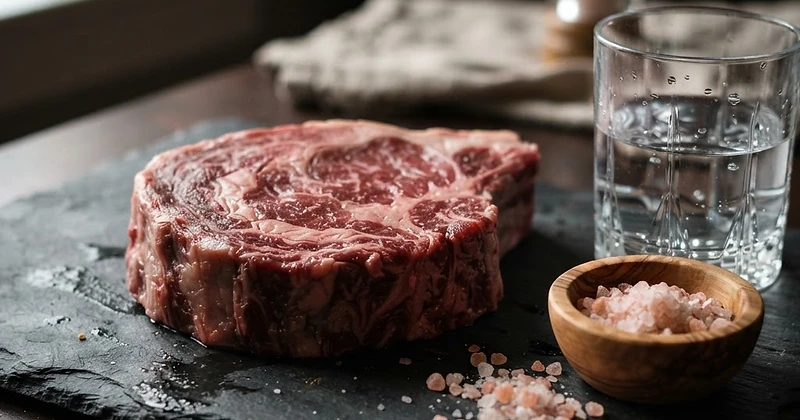
Transitioning to the Lion Diet often brings muscle cramps, fatigue, and brain fog. Discover whether pure salt is enough or if your body needs potassium and magnesium.
We only share products we believe in. Buying through a link may earn us a small commission — thanks for the support. Learn more →
The Lion Diet is celebrated as the ultimate elimination protocol. By paring your daily fuel down to ruminant meats (such as beef, lamb, and bison), pure water, and salt, it aims to reset gut permeability and silence chronic autoimmune inflammation. However, during the initial weeks of this minimalist protocol, many practitioners hit a wall marked by throbbing headaches, nighttime calf cramps, heart flutters, and deep fatigue.
These symptoms are rarely a sign that the diet is failing. Instead, they are classic manifestations of acute mineral depletion. The central debate among purists and clinical practitioners remains: on the Lion Diet, do you actually need more than just salt?
The Physiology of Electrolyte Depletion on Zero-Carb
To understand why electrolytes fluctuate so drastically on ruminant meat protocols, we must look at how the kidneys handle insulin. When carbohydrates drop to zero, serum insulin plummets. This triggers a biological process termed the natriuresis of fasting.
Under low-insulin conditions, the kidneys no longer hold onto sodium; instead, they dump it into urine alongside stored cellular water. As sodium leaves the body, an intricate feedback loop kicks in. The kidneys will sacrifice potassium and magnesium to conserve the remaining sodium pool to maintain essential blood pressure. If you do not actively replace these lost minerals, the entire cellular electrolyte gradient collapses.
Lion Diet Salt Intake: The Foundation of Hydration
In mainstream circles, salt is demonized. On an elimination diet composed strictly of unseasoned ruminant flesh, it becomes your primary survival tool. Fresh cuts of muscle meat are naturally rich in potassium but contain virtually zero sodium.
Why Unrefined Salt Matters
As documented on the Lion Diet platform, sourcing pure salt without flow agents or microplastic contamination is non-negotiable. Modern iodized table salts regularly include additives like sodium silicoaluminate, potassium iodide, and dextrose—substances that can provoke an autoimmune flare in sensitive individuals.
Opt for ancient seabed salts (such as Redmond Real Salt or high-purity Himalayan pink salt) that deliver clean sodium chloride along with micro-trace minerals.
Determining Your Optimal Baseline
Most healthy adults thriving on animal-based diets require anywhere from 3,000 to 5,000 mg of sodium daily, which equates to roughly 1.5 to 2.5 teaspoons of unrefined salt sprinkled liberally over meat and dissolved in drinking water. However, dosing should always be tuned to individual tolerance:
- Under-salting: Postural dizziness upon standing (orthostatic hypotension), persistent daytime fatigue, and tension headaches.
- Over-salting: An immediate laxative response or "salt flush," indicating your intestinal lumen has drawn water to balance excessive acute osmolarity.
Magnesium on the Lion Diet: The Missing Muscle Relaxant
While salt addresses baseline vascular volume, magnesium on the lion diet is frequently the missing link for neurological and muscular recovery. Magnesium orchestrates more than 300 biochemical reactions in the human body, including ATP synthesis, neuromuscular conduction, and deep slow-wave sleep.
Why Meat Might Leave You Low
Ruminant muscle meat offers roughly 20 to 30 mg of magnesium per 100 grams. If you eat two pounds of beef daily, you take in approximately 200 mg of dietary magnesium—well short of the optimal 350 to 450 mg benchmark suggested for active individuals. Furthermore, modern industrial agriculture has stripped many pasture soils of native minerals, leaving livestock tissues with variable trace reserves.
Common symptoms indicating you need extra magnesium include:
- Violent calf or foot spasms in the middle of the night.
- Restless leg sensations while attempting to fall asleep.
- Heart thumping or skipped beats while resting.
- Uncharacteristic muscular twitching around the eyelids or temples.
Choosing Pure Forms
If choosing to supplement, elimination dieters must select options free of corn-based fillers, vegetable starches, and artificial sweetening agents. Magnesium glycinate is widely favored for its calmative properties and high bioavailability, whereas magnesium malate serves active recovery during mornings. For those whose GI tracts cannot tolerate oral ingestion, transdermal magnesium chloride sprays applied directly to the skin bypass digestion entirely.
What About Potassium?
Potassium forms the complementary intracellular pair to extracellular sodium. Fortunately, whole ruminant muscle meat is an abundant source of potassium, provided you preserve its juices. An average pound of pan-seared or grilled beef provides roughly 1,400 to 1,600 mg of natural potassium.
However, during early adaptation, excess sodium excretion drags potassium out with it. If muscle stiffness persists despite adequate salting, supplementing modest amounts of food-grade potassium chloride (or clean potassium citrate) in diluted water can prevent systemic weakness.
Supplements on the Lion Diet: Philosophy vs. Pragmatism
Purists frequently insist that ancient hunters thrived without synthetic pill bottles. While true, ancestral humans lived in a markedly different world: they consumed entire carcasses from nose to tail, drank unsoftened mineral-dense spring water, and never experienced modern soil depletion or ambient toxic burdens.
On liondiet.com's supplement guidelines, founder Mikhaila Peterson notes that while long-term maintenance can often be achieved with meat, pure water, and unrefined salt alone, targeted, unflavored electrolytes during the transition phase dramatically shorten the painful adaptation window and avoid severe muscle cramps.
The Complete Lion Diet Hydration Protocol
To safely navigate your transition without compromising elimination purity, apply this stepwise strategy:
Phase 1: The Transition Window (Weeks 1 to 6)
- Morning Mineral Water: Drink 16 ounces of filtered room-temperature water mixed with 1/4 teaspoon of clean sea salt.
- Liberal Plate Salting: Heavily salt every meal to taste until food tastes comfortably savory without crossing into acrid bitterness.
- Targeted Magnesium: Take 200–300 mg of pure, additive-free magnesium glycinate or malate capsule 45 minutes prior to sleep.
- DIY Electrolyte Elixir (If Cramps Strike): Mix 1/2 tsp unrefined salt, 1/4 tsp potassium chloride (NoSalt or pure powder), and 1/8 tsp food-grade magnesium chloride in 32 oz of spring water. Sip slowly over several hours.
Phase 2: Long-Term Fat Adaptation (Months 3+)
Once your kidneys adapt to consistent ketosis, aldosterone production stabilizes. You will steadily require fewer outside interventions:
- Taper supplemental potassium, deriving your intake strictly from the myoglobin-rich drippings of cooked ruminant meats.
- Rely on salt to taste. If your tongue craves heavily salted meat, your physiology requires it; if salt begins tasting excessively sharp, lower the dose.
- Retain magnesium on an as-needed basis for hard physical training, high mental stress, or hot summer days.
Actionable Takeaway
Do you need more than just salt on the Lion Diet? During the first 30 to 90 days, the answer for most people is a resounding yes. While pristine unrefined sodium forms the cornerstone of fluid retention, temporary additions of pure potassium and bioavailable magnesium prevent unnecessary suffering.
Listen to your symptoms, keep excipients and fillers out of your regimen, and allow your body the mineral scaffolding it needs to heal.
Sources & References