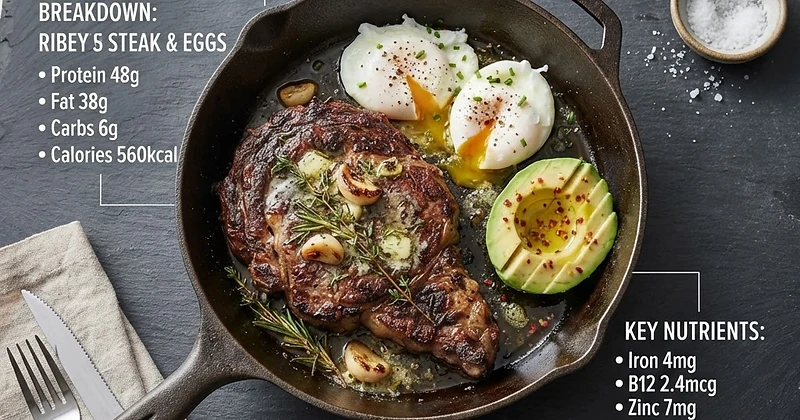
Demystify ketovore macros. Learn optimal fat to protein ratios, strict ketovore carb limits, and how to transition from precise tracking to intuitive eating.
We only share products we believe in. Buying through a link may earn us a small commission — thanks for the support. Learn more →
The ketovore diet represents one of the most powerful, metabolically flexible nutritional strategies available today. Sitting strategically between the low-carb botanical variety of standard ketogenic eating and the animal-based simplicity of the carnivore diet, ketovore prioritizes nutrient-dense animal foods while permitting a tiny fraction of low-toxicity plants. But this middle ground often brings a common dilemma: how do you track ketovore macros effectively, and how much protein, fat, and carbs do you actually need?
Unlike standard keto—which is strictly macro-driven and frequently dominated by industrial seed oils, almond flour treats, and synthetic fibers—ketovore is fundamentally food-quality-driven. Understanding your numbers allows you to burn fat, stabilize hormones, and preserve lean muscle mass without becoming trapped in perpetual calorie-counting apps.
The Fundamentals of Ketovore Macros
To establish baseline ketovore macros, you must understand how ketovore differs from standard keto. While standard keto often restricts protein to elevate blood ketones to therapeutic levels, ketovore prioritizes animal-derived complete proteins and essential fatty acids while driving carbohydrates down near the baseline.
In general, a structured ketovore breakdown by percentage of daily caloric intake looks like this:
- Fat: 60% to 75% of total calories
- Protein: 25% to 35% of total calories
- Net Carbohydrates: Less than 5% to 10% of total calories (typically 10g to 30g daily)
By securing 80% to 90% of your daily intake from ruminant meats, poultry, wild seafood, eggs, and nutrient-dense animal fats, these percentages align naturally without forcing artificial calculations into every single bite.
Dialing in the Ketovore Fat to Protein Ratio
Calculating the optimal ketovore fat to protein ratio depends on your metabolic starting point, activity levels, and primary health goals. Because dietary fat contains 9 calories per gram and protein contains 4 calories per gram, macronutrient ratios can be evaluated both by caloric percentage and by weight in grams.
1. The Weight-Loss and Recomposition Ratio (1:1 in Grams)
For individuals looking to lose excess body fat or lean out, a roughly 1:1 ratio of fat to protein by weight (in grams) works exceptionally well. For example, consuming 140 grams of protein and 140 grams of fat provides approximately 1,820 calories, yielding roughly 70% of energy from fat and 30% from protein. This elevated protein supply triggers high levels of satiety, increases the thermic effect of food, and protects metabolically active lean muscle mass.
2. The Energy and Performance Ratio (1.5:1 to 2:1 in Grams)
Athletes, lean individuals, or those with naturally high metabolic demands often need to increase dietary fats to avoid fatigue. A 1.5:1 fat-to-protein ratio (such as 180 grams of fat to 120 grams of protein) shifts caloric intake to roughly 75% fat. This provides sustainable energy throughout high-intensity training or demanding work schedules without relying on carbohydrate reloading.
How Much Protein Do You Actually Need?
A reliable standard for ketovore is targeting 0.8 to 1.2 grams of protein per pound of ideal body weight (or reference lean mass). If your goal weight is 160 pounds, aim for 130 to 160 grams of high-quality animal protein daily. Contrary to persistent diet myths, robust protein intake does not kick you out of ketosis through unprompted gluconeogenesis; rather, it provides vital amino acids that defend structural tissues, support immune markers, and stave off cravings.
Establishing Your Strict Ketovore Carbs Limit
Setting your personal ketovore carbs limit is simple: keep plant carbs minimal, deliberate, and non-inflammatory. Standard ketogenic diets typically allow up to 50 grams of net carbs daily, often opening the door to processed "keto-friendly" bars and treats that trigger gastrointestinal distress and food cravings.
On a ketovore regimen, carbohydrates are strictly capped between 10 and 30 grams of net carbs per day, with the vast majority of practitioners thriving closer to 10 to 15 grams. More importantly, where these carbs come from matters far more than the raw number:
- Permitted Sources: Avocados, small handfuls of fresh berries, fermented foods (unpasteurized sauerkraut, kimchi), raw garlic, herbs, and lemon juice.
- Carbs to Strictly Avoid: Grains of any kind, starchy tubers (potatoes, yams), legumes, refined sugars, artificial low-carb sweeteners, and processed keto packaged snacks.
Limiting carbohydrates to this low ceiling ensures your liver remains in a steady state of ketosis, smoothly using fatty acids and ketone bodies for cellular energy while eliminating blood glucose volatility.
How to Calculate Your Daily Ketovore Targets: A Step-by-Step Example
To see how this works in practice, let's calculate the daily macros for an active individual with an ideal target body weight of 170 pounds aiming for body recomposition at approximately 2,000 calories per day:
- Step 1: Set Protein. Targeting ~0.9g per pound of ideal body weight yields roughly 150 grams of protein (150g × 4 calories/g = 600 calories, or 30% of total intake).
- Step 2: Cap Net Carbs. Set a tight limit of 15 grams of net carbs sourced from half an avocado and culinary seasonings (15g × 4 calories/g = 60 calories, or 3% of total intake).
- Step 3: Fill Remaining Energy with Fat. Subtracting protein and carbohydrate calories from 2,000 leaves 1,340 calories. Dividing 1,340 by 9 yields roughly 150 grams of fat (67% of total intake).
This profile produces an effortless 1:1 fat-to-protein ratio in grams, keeping carbs negligible while optimizing satiety and metabolic rate.
Tracking vs. Intuitive Eating Ketovore: When to Put the App Away
One of the ultimate goals of shifting toward an animal-forward lifestyle is liberating yourself from obsessive food logging. However, leaping directly into unstructured eating can lead to common pitfalls, such as under-eating protein or over-consuming calorie-dense dairy fats.
Phase 1: Precision Tracking (Weeks 1 to 4)
When starting ketovore, track your food intake using a reliable digital food journal for 2 to 4 weeks. Digital macro calculators and databases such as the USDA FoodData Central library help establish portion awareness. During this foundational phase, weigh your meats, track cooking fats (such as beef tallow, ghee, and butter), and record plant add-ins. This trains your eye to instinctively recognize what 150 grams of protein and 15 grams of net carbs look like on your plate.
Phase 2: Transitioning to Intuitive Eating Ketovore
Once you are fat-adapted and familiar with your plate composition, practice intuitive eating ketovore. Animal-based nutrition naturally regulates leptin and ghrelin—your primary satiety and hunger hormones. Unlike ultra-processed carbohydrates, which encourage overconsumption, fatty meats provide unmistakable biological fullness signals.
Follow these simple rules for an intuitive, tracker-free ketovore lifestyle:
- Anchor every meal with fatty meat: Center your plate around ribeyes, 80/20 ground beef, lamb chops, salmon, or pork shoulder.
- Eat to genuine satiety: Stop eating when the meat no longer tastes appetizing or when you feel comfortably full. Never force yourself to clear the plate.
- Treat plants strictly as accents: Use berries, avocados, or pickles for flavor and variety rather than as the caloric centerpiece.
- Listen to your body's energy feedback: If you feel sluggish or cold, your fat intake may be too low. If you experience digestive heaviness or loose stools, scale back excess liquid fats.
Actionable Next Steps for Success
Ready to implement your ketovore protocol? Follow this straightforward sequence:
- Calculate your target baseline: Aim for 0.8–1.0 grams of protein per pound of ideal weight, cap net carbs under 20–30 grams, and let clean animal fats supply the rest of your daily calories.
- Stock your kitchen with nutrient-dense staples: Prioritize grass-fed beef, pasture-raised eggs, tallow, butter, wild seafood, and select low-carb fruits and vegetables.
- Track for 14 to 21 days: Verify your real-world intake to build confident visual estimates.
- Shift into intuitive eating: Put your tracking apps away, trust your restored hunger cues, and let animal-based nutrition take care of the rest.
Sources & References