Wondering how much beef to eat on the Lion Diet? Learn how to calculate your daily meat intake, ideal fat-to-protein macros, and daily calories for healing and energy.
We only share products we believe in. Buying through a link may earn us a small commission — thanks for the support. Learn more →
Stepping into the Lion Diet—the ultimate ruminant-only elimination protocol popularized by Mikhaila Peterson—strips away modern dietary confusion. There are no carbs to tally, no complex meal formulas, and zero plant anti-nutrients. Yet, one of the most common questions beginners face is deceptively simple: how much beef do you actually need to eat every day?
Because the Lion Diet restricts your plate exclusively to ruminant meat (primarily beef, lamb, bison, or goat), salt, and water, you cannot rely on side dishes, dairy, or shakes to hit your energy quota. Dialing in your carnivore diet meat intake and fat macros is essential to prevent fatigue, digestive distress, and unintentional caloric starvation. Here is your definitive guide and step-by-step framework to calculating your exact beef needs.
The Baseline: How Many Pounds of Beef Per Day?
For most adults, the baseline rule of thumb for carnivore and Lion Diet protocols is 1.5 to 2.5 pounds of ruminant meat per day, according to resources like the Carnivore Diet Macro Calculator. However, this varies depending on your body frame, activity level, and lean muscle mass.
Here is a quick look at general maintenance estimates by body weight:
- 130 – 160 lbs: ~1.5 to 2.0 lbs of fatty beef per day
- 160 – 200 lbs: ~2.0 to 2.5 lbs of fatty beef per day
- 200+ lbs (or intense athletes): ~2.5 to 3.5+ lbs of fatty beef per day
While appetite is your ultimate long-term regulator, using a structured estimation framework ensures you do not chronically under-eat during your transition phase, when hunger signals can become temporarily blunted.
How to Calculate Your Lion Diet Macros Step-by-Step
A reliable lion diet calculator methodology does not track carbohydrates (which sit at virtually 0g). Instead, it establishes your protein floor first and uses animal fat as the metabolic lever for total energy.
Step 1: Anchor Your Protein Target
Protein supports tissue repair, immune health, and lean muscle maintenance. Clinical carnivore specialists, such as those at Nutrition with Judy, generally recommend consuming 0.8 to 1.0 gram of protein per pound of ideal body weight (or lean body mass).
- Example: If your ideal weight is 170 lbs, aim for roughly 135 to 170 grams of protein daily.
- Since one pound of cooked 80/20 ground beef provides approximately 75–80 grams of protein, a 170 lb individual requires at least 2 pounds of meat daily just to hit basic protein targets.
Step 2: Determine Your Fat-to-Protein Ratio
On an all-meat diet, protein is your building block, but fat is your fuel. Getting too lean can trigger "rabbit starvation"—a state of fatigue, nausea, and hormone dysregulation. To thrive, you must calculate your energy from fat.
- Standard Maintenance / Athletic Performance: 70% to 75% of calories from fat, 25% to 30% from protein. (Roughly a 1:1 ratio by weight in grams).
- Therapeutic / Autoimmune Healing: 75% to 80%+ of calories from fat, 15% to 25% from protein. (Approaching a 2:1 fat-to-protein ratio by weight).
As noted by carnivore macro platforms like The Carnivore Macro Calculator, higher fat ratios (near 2:1 by grams) drive deeper ketosis and optimize gut and immune repair—critical goals for Lion Dieters.
Step 3: Calculating Lion Diet Daily Calories
While calorie counting is rarely required long-term on ruminant diets, knowing your lion diet daily calories prevents accidental under-fueling during adaptation. You can estimate your Total Daily Energy Expenditure (TDEE) using the Katch-McArdle equation, which factors in lean body mass.
If your maintenance intake is calculated at 2,400 kcal:
- 75% from fat: 1,800 kcal (approx. 200g of beef fat/tallow)
- 25% from protein: 600 kcal (approx. 150g of animal protein)
Translating Numbers to the Plate: Cuts and Quantities
Raw numbers are helpful, but what does this look like in your grocery cart? Leaner cuts like sirloin or eye of round will leave you drained unless paired with pure beef fat. To hit your macro goals seamlessly, lean into naturally marbled cuts or add extra beef suet and tallow:
- 80/20 Ground Beef: One of the most economical, balanced options. Two pounds provides roughly 2,300 calories, 150g protein, and 180g fat (about 71% calories from fat).
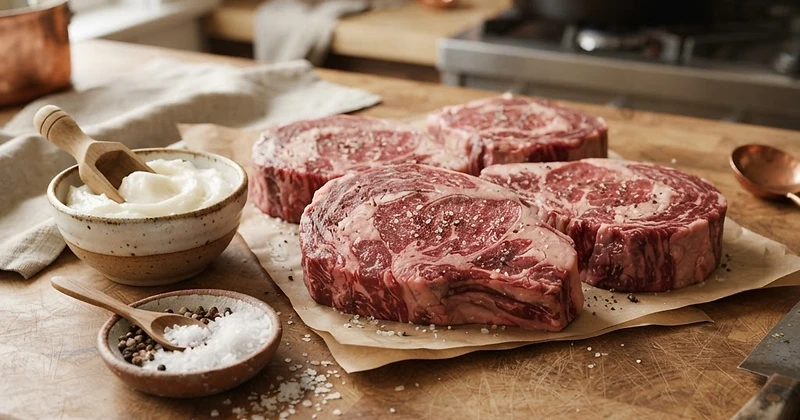
- Bone-in Ribeye: A classic staple. A 16 oz ribeye steak provides roughly 1,100 to 1,300 calories with an optimal 70–75% fat-to-protein calorie profile.
- Brisket or Short Ribs: Naturally rich in connective collagen and intermuscular fat, excellent for slow-cooking.
- Beef Tallow & Suet: If you are eating leaner cuts or need therapeutic ratios (80/20 by calories), add 2 to 4 tablespoons of rendered beef tallow or pan-seared fat trimmings to your meals.
Signs You Need to Adjust Your Intake
Your body provides real-time biofeedback. Keep an eye out for these signals to calibrate your portions:
- Low Energy or Brain Fog: You are likely under-eating fat. Increase your tallow, suet trimmings, or opt for fattier cuts.
- Loose Stools / Diarrhea: You may have ramped up unrendered, hot liquid fat too quickly. Back down slightly and let your gallbladder and bile production adapt.
- Persistent Hunger Between Meals: You are likely not eating enough volume. Increase your total daily meat intake by 0.5 lbs.
Actionable Next Steps
- Weigh your meat for 3 to 5 days: You don't need to weigh food forever, but weighing your portions initially helps you calibrate what 2 pounds of meat actually looks like.
- Secure a trusted fat source: Ask your local butcher for beef fat trimmings or suet, or stock up on grass-fed beef tallow to top off leaner cuts.
- Eat to satiety: Once you understand your baseline minimums, listen to your hunger cues. Eat when hungry, stop when comfortably full, and let nutrient-dense ruminant meat restore your vitality.
Sources & References