New to animal-based eating? Discover the definitive carnivore diet food list, actionable beginner tips, and an easy-to-follow 7-day meal plan to start your journey.
We only share products we believe in. Buying through a link may earn us a small commission — thanks for the support. Learn more →
Embarking on a carnivore lifestyle can feel both liberating and intimidating. By stripping away ultra-processed items, refined carbohydrates, and plant antinutrients, you allow your body to operate on its evolutionary blueprint: nutrient-dense, bioavailable animal foods. Whether your goal is fat loss, resolving chronic digestive distress, reducing systemic inflammation, or unlocking mental clarity, starting strong requires the right framework.
This authoritative guide gives you everything you need as a beginner: an exhaustive carnivore diet food list, an easy-to-implement carnivore diet meal plan, and practical rules for surviving adaptation and thriving long term.
What Is the Carnivore Diet?
The carnivore diet is a strict, all-meat elimination protocol. In its standard form, it consists exclusively of foods derived from the animal kingdom—meat, fish, poultry, eggs, and healthy animal fats—while excluding all grains, legumes, vegetables, fruits, sugars, and seed oils.
Unlike conventional calorie-restricted regimens, carnivore eating relies on natural satiety cues. Because animal proteins and fats trigger the release of key satiety hormones like peptide YY (PYY) and cholecystokinin (CCK), dieters naturally stabilize their appetite and blood glucose without the need to weigh portions or track every calorie.
The Complete Carnivore Diet Food List
Knowing what to eat on carnivore diet protocols is simple once you organize foods into tiers of density and tolerance. Use this comprehensive reference when stocking your kitchen:
1. Red Meat (The Foundation)
Ruminant meats—animals with complex multi-chambered stomachs like cows, sheep, and bison—provide the most complete micronutrient profiles and fatty acid balances. Aim to make ruminant meat the core of your plate:
- Beef: Ribeye, New York strip, chuck roast, brisket, T-bone, flank steak, and 80/20 ground beef
- Lamb & Mutton: Chops, shanks, ground lamb, leg of lamb
- Bison, Elk, and Venison: Naturally lean, perfect when paired with added beef tallow or butter
- Pork: Pork belly, thick bacon (uncured, sugar-free), pork chops, ribs
2. Poultry and Fowl
While poultry provides variety, chicken and turkey are relatively lean and higher in polyunsaturated fats (PUFAs) than ruminant meat. Always opt for skin-on, dark meat cuts:
- Chicken thighs, drumsticks, and wings
- Whole roasted chicken (skin intact)
- Duck, goose, and quail (naturally higher fat content)
3. Fish and Seafood
Wild-caught seafood is exceptional for supplying bioavailable omega-3 fatty acids (EPA and DHA), iodine, and essential trace minerals:
- Fatty Cold-Water Fish: Wild salmon, mackerel, sardines, and anchovies
- Shellfish: Oysters (loaded with zinc and copper), mussels, shrimp, crab, and scallops
- White Fish: Cod, halibut, and haddock (add butter or tallow for adequate fat intake)
4. Pastured Eggs
Whole eggs are nature’s multivitamin. The yolks are packed with choline, fat-soluble vitamins (A, D, E, K2), and lutein. You can prepare them scrambled, poached, hard-boiled, or fried in butter.
5. Animal Fats
Because carbohydrate intake is effectively zero, your metabolism shifts into ketosis and uses dietary fat for fuel. Never fear healthy animal fats:
- Beef tallow
- Clarified butter (ghee)
- Grass-fed butter
- Duck fat and lard (pasture-raised)
6. Organ Meats (Optional Nutritional Boost)
For those pursuing nose-to-tail optimization, small amounts of organ meats offer unrivaled nutrient concentrations:
- Beef Liver: The most concentrated dietary source of bioavailable vitamin A, B12, and iron
- Heart, Kidneys, and Tongue: Rich in CoQ10, selenium, and collagenous peptides
7. Dairy & Seasonings: The Gray Area
- Dairy: Best kept minimal for true beginners. Heavy cream, aged hard cheeses (parmesan, cheddar), and butter are permissible if you tolerate dairy proteins (casein) and lactose without inflammation or digestive stall.
- Seasonings: Pure salt (such as unprocessed sea salt or mineral salt) is mandatory. Mild herbs, black pepper, and garlic powder are tolerated by many, but strict carnivores stick strictly to salt and water.
Foods to Strictly Avoid
To successfully reprogram your gut microbiome and enter metabolic adaptation, eliminate all plant matter and industrial additives:
- All grains (wheat, rice, oats, corn)
- All legumes, lentils, soy, and peanuts
- All industrial seed and vegetable oils (canola, soybean, corn, sunflower)
- All fruits, fruit juices, and vegetables
- All processed sugars, artificial sweeteners, and sugar alcohols
- High-carb dairy (milk, sweetened yogurts, processed cheese slices)
7-Day Carnivore Diet Meal Plan for Beginners
Here is an approachable, nutrient-dense 7-day template designed to keep you satiated while managing your macronutrients effortlessly:
Day 1
- Breakfast: 3 pasture-raised eggs scrambled in 1 tbsp of grass-fed butter with 3 slices of sugar-free bacon.
- Lunch: Two 80/20 ground beef burger patties topped with melted sharp cheddar (optional) and flaky sea salt.
- Dinner: 12 oz pan-seared ribeye basted in beef tallow.
Day 2
- Breakfast: Omelet made with 3 eggs, pulled pork or diced ham, and cooked in ghee.
- Lunch: Wild canned sardines in olive oil (drained) or spring water, served alongside 2 hard-boiled eggs.
- Dinner: Braised beef short ribs or slow-cooked chuck roast seasoned generously with salt.
Day 3
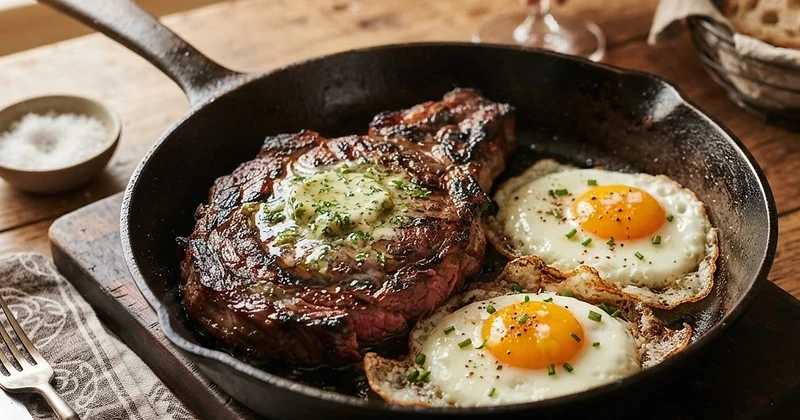
- Breakfast: 8 oz lean beef burger patty topped with two sunny-side-up eggs.
- Lunch: Crispy skin-on chicken thighs roasted in duck fat.
- Dinner: Wild-caught salmon fillet pan-seared in butter with a side of steamed shrimp.
Day 4
- Breakfast: 3 scrambled eggs with browned ground lamb and sea salt.
- Lunch: Leftover roast beef or cold sliced ribeye steak.
- Dinner: 14 oz New York strip steak with a generous compound butter dollop.
Day 5
- Breakfast: 4 strips of thick-cut pork bacon and 3 poached eggs.
- Lunch: Canned tuna or salmon mixed with melted butter and salt.
- Dinner: Lamb loin chops seared hot in tallow, served with 2 oz beef liver (if eating nose-to-tail).
Day 6
- Breakfast: Carnivore scramble: ground beef cooked in tallow mixed with 3 scrambled eggs.
- Lunch: Duck breast or roasted chicken wings tossed in melted butter and sea salt.
- Dinner: Reverse-seared ribeye steak or prime rib cut.
Day 7
- Breakfast: 3 duck or chicken eggs fried in butter with breakfast sausage links (sugar-free).
- Lunch: Fresh oysters or mussels alongside an 8 oz beef patty.
- Dinner: Slow-roasted pork shoulder (carnitas style, salt-only) or tender brisket.
Actionable Tips to Master the Transition
As you transition away from carbohydrate dependence, implement these rules to eliminate the "keto flu" and smooth your metabolic shift:
- Prioritize Salt and Electrolytes: When carbohydrate intake drops, insulin levels fall, causing your kidneys to rapidly excrete water and sodium. Liberally salt your food and consider adding electrolytes (sodium, potassium, magnesium) to your water during the first 14 days.
- Eat Until Confidently Full: Never restrict portions in your initial weeks. Eat when hungry and stop when satisfied. Your body is adjusting fuel pathways; starvation signals will trigger intense sugar cravings.
- Track Your Digestion: Going zero-fiber can cause transient stool irregularities. If stools are too loose, pull back slightly on rendered liquid fats and focus on firm steaks. If sluggish, increase fatty cuts and ensure proper hydration and salt intake.
- Commit to 30 Days: Meaningful health transformations take time. Commit to a 30-day baseline before evaluating lab metrics, energy shifts, and weight loss.
Sources & References