Carnivore Diet for Beginners: The Complete Starter Guide and 7-Day Meal Plan
← All articles
Diet BasicsCarnivore

Carnivore Diet for Beginners: The Complete Starter Guide and 7-Day Meal Plan

Discover how to start the carnivore diet as a beginner. Master the food list, navigate adaptation symptoms, and follow an actionable 7-day zero carb meal plan.

By Editorial Team

We only share products we believe in. Buying through a link may earn us a small commission — thanks for the support. Learn more →

Eliminating every plant food in favor of pure animal nutrition might sound counterintuitive to conventional dietary advice, but for thousands seeking digestive healing, metabolic reset, and stable daily energy, the carnivore diet for beginners represents the ultimate elimination protocol. Often referred to as a strict zero carb diet, this lifestyle strips away modern dietary noise and supplies your body with the most bioavailable proteins, essential fatty acids, and micronutrients known to human physiology.

What Is the Carnivore Diet?

The carnivore diet is an animal-based eating framework that removes all plant-derived foods: vegetables, fruits, grains, legumes, seed oils, nuts, and processed sugars. Instead, followers consume exclusively animal foods: ruminant meat, poultry, pork, wild seafood, eggs, and animal fats. By completely cutting carbohydrates, the body depletes its glycogen stores and transitions into ketosis, burning fatty acids and ketone bodies for fuel rather than glucose.

While related to ketogenic or ketovore frameworks, carnivore is distinct. While keto allows leafy greens, avocado, nuts, and low-carb sweeteners, carnivore is a true zero-plant elimination protocol. This distinction eliminates antinutrients (such as oxalates, phytates, and lectins) and dietary fibers that frequently trigger gut distress, bloating, or systemic inflammatory responses in sensitive individuals.

The Complete Carnivore Diet Food List

Success on a carnivore lifestyle depends on prioritizing nutrient-dense, fatty cuts of animal proteins. Below is the essential carnivore diet food list broken down into core foundational foods, supporting proteins, and optional items.

1. Core Staples (Ruminant Meats)

Ruminant meats are the cornerstone of the diet due to their complete amino acid profile, high stearic acid content, and superior micronutrient density.

  • Beef cuts: Ribeye, New York strip, chuck roast, brisket, T-bone, 80/20 or 73/27 ground beef.
  • Lamb and mutton: Chops, shoulder, ground lamb, rack of lamb.
  • Bison and venison: Steaks, ground bison (pair lean game meat with added tallow or butter).

2. Supporting Animal Proteins

  • Pork: Sugar-free pork belly, thick-cut bacon, pork chops, Boston butt roasts.
  • Poultry: Skin-on chicken thighs, wings, rotisserie chicken, duck breast (favor skin-on dark meat over lean chicken breasts to ensure adequate fat intake).
  • Seafood and shellfish: Fatty cold-water fish like wild salmon, sardines, and mackerel; plus oysters, shrimp, and crab for trace minerals like zinc, copper, and iodine.
  • Eggs: Whole pasture-raised eggs (scrambled, soft-boiled, or fried in animal fat).

3. Fats, Broths, and Seasonings

  • Cooking fats: Beef tallow, lard, duck fat, and grass-fed ghee or butter.
  • Bone broth: Slow-simmered beef or chicken bone broth (made without aromatic vegetables or herbs).
  • Seasonings: High-mineral sea salt or Redmond real salt. While strict carnivores avoid ground pepper and spices, beginners may ease in with gentle seasonings if tolerated.

4. Optional Additions

  • Organ meats: Beef liver, heart, or kidney consumed 1–2 times weekly provides fat-soluble vitamins (A, D, K2) and bioavailable iron.
  • Dairy (Ketovore/Carnivore): A small splash of heavy cream or aged hard cheeses (Parmesan, cheddar) can be used, though beginners dealing with gut issues or weight stalls should omit dairy initially.

How to Start: 4 Essential Rules for Beginners

Rule 1: Prioritize Fat Over Protein

One of the most frequent beginner pitfalls is consuming overly lean meat like skinless chicken breasts. On a zero carb diet, fat is your primary energy substrate. Aim for an approximate 1:1 to 2:1 fat-to-protein ratio in grams (roughly 70% to 80% of daily calories coming from fat). Choose well-marbled ribeyes and 80/20 ground beef, and generously baste meats with tallow or butter.

Rule 2: Eat Until Satiated, Never Restrict Calories

Forget calorie counting, macro tracking apps, and artificial portion control. Focus on listening to your natural hunger cues. When starting out, eat until you are completely full at every meal. Most adults eat between 1.5 and 3 pounds of meat per day, often starting with three meals daily before naturally settling into one or two meals per day as satiety hormones stabilize.


Join the Community

Create your free account to access personalized targets, daily tracking, and lifestyle guidance tailored to your diet path.

Sign Up Free

Rule 3: Master Your Electrolytes

As insulin levels drop due to carbohydrate restriction, the kidneys release stored sodium and water rapidly. Without adequate electrolyte management, beginners commonly encounter the "keto flu" or carnivore adaptation symptoms: headaches, brain fog, fatigue, and muscle cramps. Counteract this by heavily salting food to taste (5 to 7 grams of salt daily) and supplementing with magnesium glycinate or unflavored zero-sugar electrolyte mixes.

Rule 4: Give It a Full 30 Days

Your gut microbiome, digestive enzymes, and cellular machinery need time to upregulate fat oxidation. Commit to at least 30 consecutive days of pure animal nutrition before assessing weight, energy, or blood markers.

The 7-Day Carnivore Meal Plan

This simple, nutrient-dense carnivore meal plan shows you how easy it is to prepare repeatable, satisfying meals throughout your initial adaptation week.

Day 1

  • Breakfast: 3 pasture-raised eggs fried in beef tallow with 3 thick strips of sugar-free bacon.
  • Lunch: Two 80/20 ground beef patties seasoned with sea salt.
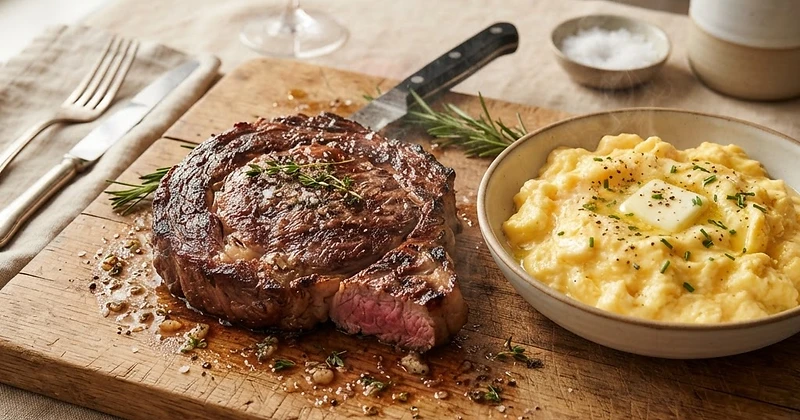
  • Dinner: Pan-seared ribeye steak basted in grass-fed butter.

Day 2

  • Breakfast: Scrambled eggs cooked with butter and chopped leftover steak.
  • Lunch: Wild canned sardines in water or olive oil drained, paired with hard-boiled eggs.
  • Dinner: Slow-cooked pork shoulder roast with salted crispy skin.

Day 3

  • Breakfast: 3 soft-boiled eggs sprinkled with sea salt and cold butter slices.
  • Lunch: Air-fried or baked chicken thighs with crispy skin, dipped in melted butter.
  • Dinner: Grilled lamb chops with a cup of warm, salted beef bone broth.

Day 4

  • Breakfast: Ground beef hash (crisped 80/20 ground beef topped with two sunny-side-up eggs).
  • Lunch: Leftover lamb chops or pork roast.
  • Dinner: Wild-caught salmon fillet pan-seared in ghee, served with a small side of shrimp.

Day 5

  • Breakfast: 3-egg omelet cooked in butter (optional: a sprinkle of aged cheddar if dairy is tolerated).
  • Lunch: Chuck steak pan-seared in tallow.
  • Dinner: 80/20 beef burgers topped with crispy bacon and a side of bone broth.

Day 6

  • Breakfast: Bacon strips and poached eggs.
  • Lunch: 2–3 oz of pan-seared beef liver paired with ground beef patties.
  • Dinner: Generous New York strip steak topped with herb-free compound butter.

Day 7

  • Breakfast: Carnivore scramble: ground pork, eggs, and sea salt cooked in lard.
  • Lunch: Cold roast beef or shredded roasted chicken thighs.
  • Dinner: Sunday prime rib roast or thick-cut ribeye basted in melted butter.

Navigating the Adaptation Period

During weeks one and two, expect temporary changes in digestion and energy. Because fiber is suddenly eliminated, gut motility adapts; some beginners experience loose stools, while others go days between bowel movements. Both are normal physiological adjustments to zero-bulk digestion.

Fatigue or mild muscle weakness can usually be traced to low sodium or fluid depletion. Keep water and electrolyte intake high, rest appropriately, and resist the urge to add back carbohydrate snacks. By week three, most beginners experience profound mental clarity, eliminated cravings, and stable, all-day energy.

Sources & References

  • Lennerz, B.S., et al. (2021). Behavioral Characteristics and Self-Reported Health Status among 2029 Adults Consuming a 'Carnivore Diet'. Current Developments in Nutrition, 5(12), nzab133.
  • Goedeke, S., et al. (2025). Assessing the Nutrient Composition of a Carnivore Diet: A Case Study Model. Nutrients, 17(1), 140.
  • Simpson, S.J. & Raubenheimer, D. (2005). Obesity: the protein leverage hypothesis. Obesity Reviews, 6(2), 133-142.

Join the Community

Create your free account to access personalized targets, daily tracking, and lifestyle guidance tailored to your diet path.

Sign Up Free

We use cookies and similar technologies to operate the site and improve your experience. By continuing, you agree to our use of non-essential cookies. See our Privacy Policy.