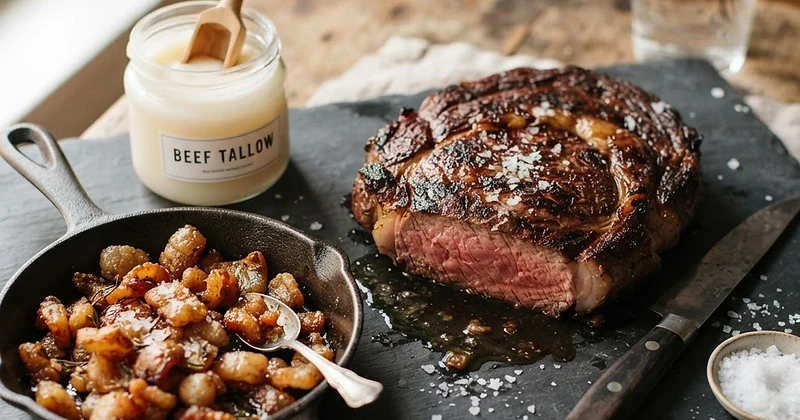
Think the Lion Diet means boring, dry steak every single meal? Think again. Master 7 distinct preparation methods to turn beef, tallow, and salt into a culinary rotation you will crave.
We only share products we believe in. Buying through a link may earn us a small commission — thanks for the support. Learn more →
When newcomers first encounter the Lion Diet, their first reaction is almost always disbelief: “You only eat ruminant meat, animal fat, salt, and water? Won't I lose my mind from boredom in a week?”
It is a fair question. Unlike the broader carnivore diet—which permits bacon, poultry, eggs, seafood, dairy, and heavy cream—the Lion Diet is the ultimate elimination protocol. Pioneered for severe autoimmune conditions, refractory gut dysbiosis, and chronic inflammation, its genius lies in extreme simplicity. But simplicity does not have to mean monotony.
Food fatigue rarely stems from the core ingredient; it stems from texture fatigue. If you boil a ground beef patty or overcook a lean steak in a Teflon pan three times a day, your appetite will revolt. However, when you learn how temperature, cut selection, rendering, and resting fundamentally alter beef's mouthfeel and flavor profiles, three simple ingredients—beef, tallow, and salt—become a culinary playground.
Here are 7 distinct, tested methods to prepare beef, tallow, and salt so you never get bored on the Lion Diet.
The Core Rules of Cooking for the Lion Diet
Before firing up the stove, understand the parameters of your kitchen pantry on this elimination phase:
- Meat: Strictly ruminant meat—beef, lamb, goat, elk, or bison. Beef is the most accessible and cost-effective staple.
- Fat: Pure ruminant fat, specifically rendered beef tallow or fresh raw beef suet/trim. No seed oils, butter, or olive oil.
- Salt: High-quality, additive-free salt without anti-caking agents (such as sea salt, Maldon flakes, or Redmond Real Salt).
- Liquid: Filtered or spring water.
Now, let's explore how to transform these ingredients through varied textures, temperatures, and techniques.
1. The Cast-Iron Hard Sear (The Golden Crust)
The Maillard reaction is your best ally on the Lion Diet. When amino acids and reducing sugars in meat are exposed to dry, intense heat, they produce dozens of complex flavor compounds that simulate richness and depth.
How to Do It:
- Take a thick-cut ribeye, New York strip, or chuck eye steak. Pat it completely dry with paper towels—moisture is the enemy of a crisp crust.
- Pre-salt the steak heavily with coarse salt and allow it to dry-brine in the refrigerator for 2 to 4 hours.
- Preheat a heavy cast-iron skillet over medium-high heat until it begins to smoke faintly. Drop a dollop of rendered beef tallow into the pan.
- Press the steak firmly onto the skillet. Sear untouched for 2 to 3 minutes until a mahogany crust forms, then flip and baste continuously with the melted fat until you reach an internal temperature of 125°F to 130°F (medium-rare).
- Rest the meat for 7 to 10 minutes before slicing. Top with a final sprinkle of flaky Maldon sea salt.
2. Crispy Beef Fat “Cracklins” (The Crunchy Snack)
One of the hardest elements to leave behind when switching to an animal-based protocol is crunch. Crispy beef fat cubes—often referred to as crunchy bits or beef cracklins—are the Lion Diet's ultimate replacement for potato chips or croutons.
How to Do It:
- Acquire raw beef suet or brisket fat trimmings from your local butcher or supermarket. Chill the fat until firm, then cut it into 1/2-inch uniform cubes.
- Place the cubes into a dry skillet over low-medium heat (or into an air fryer basket set to 380°F).
- As the fat renders, the solids will gently fry in their own oil. Stir occasionally so they do not scorch.
- Once the pieces turn golden-brown, float to the top, and bubble lightly (about 25–35 minutes on the stove or 15–20 minutes in an air fryer), remove them with a slotted spoon onto a wire rack.
- Immediately toss with fine sea salt while sizzling. Store them in an airtight container for up to a week; they remain crispy and provide concentrated energy on busy days.
3. The Pressure-Cooked & Air-Fried Combo (Tender Yet Crispy)
If you suffer from histamine intolerance—a condition common among those utilizing the Lion Diet—slow cooking roasts in a crockpot for 12 hours can sometimes trigger reactions. The solution? The Instant Pot plus air fryer combo.
How to Do It:
- Place a tough, economical cut (like a beef chuck roast, beef short ribs, or shank) directly into a pressure cooker with 1/2 cup of water and coarse sea salt.
- Cook on high pressure for 45 to 55 minutes, then perform a quick pressure release. The meat will be fall-apart tender while minimizing histamine accumulation.
- Transfer the shredded or chunked meat into an air fryer basket set to 400°F–425°F for 6 to 10 minutes.
- The exterior develops intensely crisp edges while the interior stays moist and gelatinous. It delivers the satisfying mouthfeel of carnivore carnitas using nothing but beef, water, and salt.
4. Smashed Tallow Burgers
Thick burger patties can feel heavy, but thin smash burgers maximize surface caramelization and recreate that diner-style burger craveability without bread, mustard, or condiments.
How to Do It:
- Form 80/20 ground beef into small 2-ounce to 3-ounce loose balls. Do not overwork the meat.
- Get a flat cast-iron griddle or skillet screaming hot. Coat lightly with a touch of beef tallow.
- Place a meat ball on the hot steel and immediately crush it completely flat with a heavy metal burger press or stiff spatula.
- Generously salt the surface. Let it cook undisturbed for 90 seconds until the edges are lacy, dark, and crisp.
- Scrape forcefully beneath the crust to flip, cook for another 45 seconds, and stack 3 to 4 patties together on your plate. Spoon any rendered pan fat directly over the top before eating.
5. Slow-Cooked Beef & Gelatin Broth (Sipping Soup)
Drinking plain hot water all day can feel stark. A rich, salted beef broth gives you a deeply comforting warm beverage that soothes the gut lining and provides bioavailable collagen.
How to Do It:
- Combine beef marrow bones, knuckle bones, and a small scrap of chuck or brisket in a stockpot or Dutch oven.
- Cover with clean filtered water and add a generous tablespoon of unrefined salt.
- Bring to a boil, skim any impurities from the surface, reduce heat to the lowest setting, cover, and let simmer for 6 to 10 hours (or 2.5 hours in a pressure cooker).
- Strain the liquid into glass mason jars. When hot, pour into a mug, whisk in a tablespoon of rendered beef tallow to emulsify the healthy fats, add extra salt to taste, and sip throughout the morning.
6. Oven-Baked “Beef Bacon” Strips
Missing your weekend breakfast fry-up? Fatty brisket flats or beef navel cut into thin strips function as a phenomenal, additive-free version of beef bacon.
How to Do It:
- Source raw beef belly (navel) or an untrimmed flat cut of brisket.
- Freeze the cut for 45 minutes until firm to the touch, then slice into thin 1/8-inch bacon-like strips against the grain using a sharp chef's knife.
- Arrange the strips across an elevated baking rack set inside a rimmed baking sheet so the fat drains slightly as it crisps.
- Season both sides aggressively with fine sea salt.
- Bake at 375°F (190°C) for 20 to 25 minutes, flipping once halfway through, until bubbling, browned, and crispy. Pour the collected baking sheet drippings into a jar to save as fresh tallow!
7. Homemade Whipped Tallow Butter
Cold tallow from the fridge can be hard and chalky, making it difficult to spread over leaner cuts of meat like sirloin or tenderloin. Whipping tallow changes its crystalline structure, transforming it into a silky, spreadable fat that resembles whipped butter.
How to Do It:
- Render clean, pure suet or brisket fat using the wet rendering method (simmering chopped fat with water and straining) to create a clean, odor-neutral fat cake.
- Melt 1 cup of tallow in a bowl, stir in 1 teaspoon of fine sea salt, and place the bowl in the refrigerator for 20–30 minutes until it turns opaque and soft (the texture of soft cream cheese).
- Using a handheld electric mixer or stand mixer with a whisk attachment, whip the softened tallow on high speed for 3 to 5 minutes.
- Air incorporates into the tallow, turning it snowy white, light, and spreadable. Use a dollop to melt over your hot steaks or pan-seared patties for rich mouthfeel without the dairy.
Actionable Tips to Avoid Palate Burnout
If you find your motivation waning on the Lion Diet, run through this practical troubleshooting checklist:
- Adjust your salt intake: When eating strict zero-carb, insulin levels drop and your kidneys excrete sodium rapidly. Under-salting makes beef taste flat and unappetizing. Generously salt your food.
- Shift your fat-to-protein ratio: Eating meat that is too lean often triggers “protein satiety” before you meet your caloric needs, making beef taste repulsive. Add more tallow or cracklins to keep your energy and palate balanced.
- Alternate cooking appliances: Rotate between the outdoor grill, cast-iron skillet, air fryer, and pressure cooker across the week to keep textural variety high.
- Diversify the animal: If beef feels monotonous, remember that the Lion Diet encompasses other ruminants: lamb chops, ground bison, or elk steaks provide distinct, gamey flavors while keeping you within protocol.
Sources & References