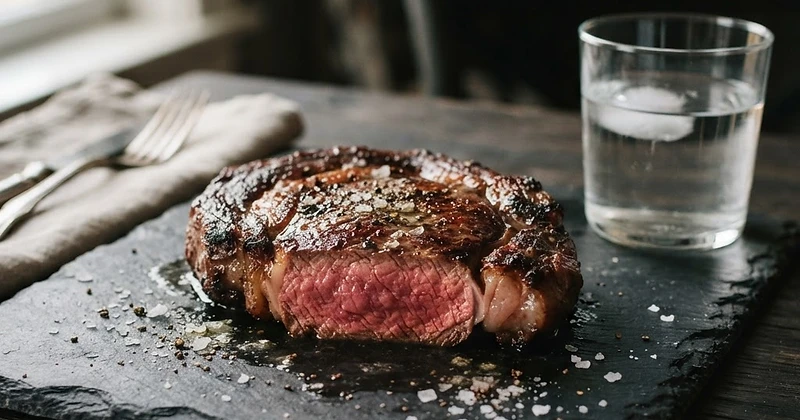
Transitioning to ruminant meat, salt, and water? Discover how to manage lion diet digestion, troubleshoot constipation versus low stool volume, and eliminate diarrhea—all without plant fiber.
We only share products we believe in. Buying through a link may earn us a small commission — thanks for the support. Learn more →
When individuals transition to the Lion Diet—the ultimate elimination protocol consisting exclusively of ruminant meat (primarily beef, lamb, and bison), salt, and water—digestive surprises are almost inevitable. Stripping away all carbohydrates, plants, dairy, and supplemental fibers initiates rapid metabolic and physiological adaptations. While many turn to the regimen for radical lion diet gut healing, early experiences often swing between two extremes: watery distress or days without a bowel movement.
Conventional medical doctrine insists that dietary fiber is mandatory for healthy digestion. Yet, thousands thriving on ancestral carnivore protocols demonstrate otherwise. Navigating lion diet digestion simply requires understanding how digestive mechanics shift when human fuel changes from plant-heavy fiber bulk to dense, animal-based bioavailable nutrition.
The Fiber Paradigm: Why Less Fiber Does Not Mean Poor Digestion
The standard belief that dietary fiber is indispensable for gut motility has faced serious scientific scrutiny. In a landmark study published in the World Journal of Gastroenterology, researchers found that reducing or completely eliminating dietary fiber notably resolved chronic idiopathic constipation, bloating, and abdominal pain in patients, directly contradicting standard dietary guidelines. When plant bulk is eliminated, the gastrointestinal tract is no longer forced to push undigested roughage through an inflamed bowel.
Meat and ruminant fat are digested nearly entirely in the stomach and small intestine via hydrochloric acid, pepsin, pancreatic proteases, and bile. Minimal unabsorbed residue ever reaches the large intestine. Consequently, standard rules regarding stool frequency, volume, and consistency no longer apply.
Diarrhea on a Beef and Salt Diet: Causes and Solutions
Experiencing diarrhea beef and salt diet side effects in the initial two to four weeks is common. It rarely signals an allergy or infection; instead, it typically represents acute physiological lag during digestive adaptation.
1. Bile Acid Lag and Rendered Fat Overload
Your liver synthesizes bile salts, which are concentrated in the gallbladder to emulsify dietary fats. When someone shifts rapidly from a low-to-moderate fat diet to high-fat ruminant meat, the liver and gallbladder often struggle to provide sufficient bile volume immediately. Unabsorbed, free fatty acids pass into the colon, exerting an osmotic pull that draws water into the bowel, causing loose, watery, or oily stools.
Rendered fats—liquid tallow in the pan or melted suet—pass through the pyloric sphincter rapidly, hitting the small intestine in sudden surges that overwhelm bile capacity.
2. Microbiome Turnover and Die-Off
Research published in Nature shows that human gut microbial profiles shift rapidly within 48 to 72 hours of adopting an animal-exclusive diet. Fiber-fermenting bacteria diminish, while bile-tolerant species expand. The rapid turnover of bacterial colonies can transiently irritate the intestinal lining, contributing to liquid stools during the opening weeks.
How to Fix Diarrhea on the Lion Diet
- Cool your fats: Avoid drinking liquid pan drippings or melted tallow. Allow fat to cool to room temperature or solidify before consuming. Solid animal fat digests more slowly, pacing bile release.
- Moderate fat intake temporarily: Slightly dial back total added fat for 7 to 10 days, letting your gallbladder adjust production, then ramp back up gradually.
- Watch sudden salt and water boluses: Guzzling large amounts of salted water in one sitting can act as an unintended osmotic flush. Sip water steadily throughout the day.
Constipation on the Lion Diet: Normal Low Volume vs. Actual Stoppage
Evaluating constipation lion diet issues requires distinguishing between true pathology and biological efficiency.
Reduced Frequency Is Normal, Not Constipation
Because animal meat and fat are almost entirely absorbed, stool volume decreases dramatically. On standard plant-heavy diets, stool consists largely of undigested cellulose, water, and dead fermentative bacteria. On a lion protocol, you are feeding the body pure nutrition with near-zero waste. Going two or even three days without a bowel movement—provided you experience no pain, pressure, straining, or bloating—is normal physiology, not constipation.
Diagnosing True Lion Diet Constipation
True constipation exists when you experience painful straining, hard, dry pebble stools, abdominal distension, or genuine discomfort. If this occurs, lack of fiber is rarely the cause. Instead, look to three common triggers:
- Inadequate dietary fat: Eating meat that is too lean (such as 90/10 ground beef or trimmed sirloin) without sufficient fat stalls peristalsis. Fat stimulates the release of cholecystokinin (CCK), which prompts gallbladder contraction and stimulates colonic motor activity.
- Dehydration and sodium depletion: In the absence of dietary carbohydrates, insulin drops and the kidneys excrete sodium and water rapidly. Without adequate sodium and hydration, the colon draws water out of fecal matter to preserve blood volume, leaving stools dense and hard to pass.
- Slow gut rehabilitation: Those adopting the Lion Diet to reverse years of chronic inflammatory bowel conditions or gut dysbiosis may experience sluggish natural motility until gut tissues recover.
Actionable Fixes for Constipation Without Fiber
- Elevate your fat-to-protein ratio: Choose fatty ruminant cuts like 75/25 ground beef, bone-in ribeyes, or lamb belly. Adding chilled beef suet or unsalted solid tallow creates natural stool softening via adequate lipid lubrication.
- Liberalize unrefined salt: Salt your meat generously to taste. Sodium retention supports fluid balance, preventing excess dehydration of the bowel contents.
- Consider targeted temporary support: If motility remains stubbornly sluggish during initial gut healing, temporary use of magnesium glycinate or unflavored ox bile extract can assist peristalsis and fat processing while your native digestion adapts.
The Role of the Lion Diet in Long-Term Gut Healing
Despite transitional digestive shifts, the Lion Diet remains one of the most effective interventions for calming digestive inflammation. By removing all antinutrients (lectins, oxalates, phytates), fermentable carbohydrates (FODMAPs), and artificial additives, the gut mucosa is granted a low-irritant environment to repair cellular tight junctions. With precise fat management, adequate hydration, and patient transition intervals, the digestive system achieves steady equilibrium—proving optimal gastrointestinal function does not require a single gram of fiber.