Discover how to master a nutrient-dense ketovore lifestyle without breaking the bank. Learn smart sourcing strategies, budget keto meats, and a cheap ketovore meal plan.
We only share products we believe in. Buying through a link may earn us a small commission — thanks for the support. Learn more →
One of the most persistent myths surrounding meat-centric nutritional models is that they are financially unsustainable for the average household. Scrolling through social media, it is easy to assume that doing ketovore on a budget is impossible when influencers feast exclusively on 40-dollar dry-aged ribeyes and expensive pasture-raised poultry. In reality, a diet centered on animal foods and low-carb plants can be far more cost-effective than standard grocery shopping when executed strategically.
When you transition to a ketovore approach—where roughly 80% to 90% of your calories come from animal sources alongside minimal, low-inflammatory plants—your grocery bill often drops in subtle ways. You instantly eliminate expensive processed snacks, pre-packaged keto desserts, craft sodas, and takeout. However, meat prices can still add up quickly if you do not understand butcher cuts, bulk sourcing, and nutrient density. Here is your definitive blueprint for thriving on an affordable carnivore diet and ketovore protocol without overspending.
The Core Staples: Best Budget Keto Meats and Animal Foods
Building a high-satiety, low-cost plate starts with picking proteins that offer the highest nutritional value per dollar. While premium cuts get the glory, traditional cuts provide exceptional nutritional profiles at a fraction of the price.
1. High-Fat Ground Beef (73/27 or 80/20)
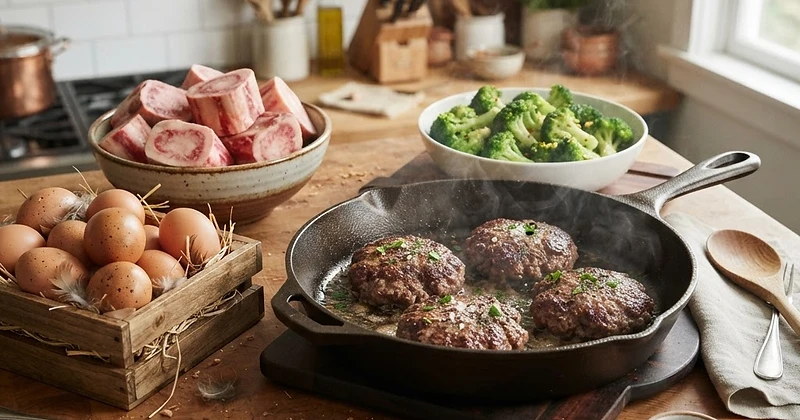
Ground beef is the undisputed foundation of any cheap ketovore meal plan. Counterintuitively, higher-fat ground beef—such as 73/27 or 80/20—is generally far cheaper per pound than lean 93/7 varieties. Because the ketovore metabolic state thrives on animal fat for daily energy, buying high-fat ground meat gives you both essential amino acids and fuel in one economical package. Look for chub packs (often sold in 5- to 10-pound rolls) at discount supermarket chains or warehouse retailers, which frequently drop below four dollars per pound.
2. Whole Chickens and Bone-In Chicken Thighs
Boneless, skinless chicken breasts may be low in fat, but they are also pricier and far less satisfying. Instead, prioritize bone-in, skin-on dark meat like chicken thighs or drumsticks, which carry the fat and connective tissue needed on a ketovore diet. Buying a whole roaster chicken and breaking it down yourself offers even greater value; you yield multiple rich meals and keep the carcass for gelatinous, homemade bone broth.
3. Nutrient-Dense Organ Meats
If you want peak micronutrient intake on a budget, organ meats like beef liver and heart are unmatched. Beef liver contains substantial concentrations of preformed vitamin A, B-vitamins (especially B12), iron, and copper. Because offal remains underappreciated in modern retail, butchers sell fresh liver and heart at bargain-basement rates—often between two and four dollars per pound. Integrating just four to six ounces of liver weekly significantly boosts your nutrient profile without costly supplements.
4. Whole Eggs and Canned Seafood
Eggs represent nature’s premier whole-food multivitamin, providing bioavailable choline, vitamin D, lutein, and healthy fats. Even with market price fluctuations, eggs remain one of the most cost-effective sources of complete protein on earth. Supplement your fresh meats with shelf-stable canned fish—such as sardines in water, wild-caught mackerel, or tuna—to secure your weekly omega-3 fatty acids without purchasing high-ticket fresh salmon fillets.
Smart Grocery Tactics: How to Cut Meat Costs by 40%
Finding budget keto meats is only half the battle. How and when you source your food makes all the difference in your monthly financial ledger.
- Embrace Conventional Options: While 100% grass-fed and grass-finished meat is ideal, conventional grain-finished beef remains remarkably nutrient-dense. Standard grocery-store beef will still provide superior bioavailable micronutrients and protein compared to typical processed alternatives. Never let an inability to afford specialty labels deter you from eating whole animal foods.
- Time the "Manager’s Specials": Retail butchers regularly discount fresh meats that are approaching their "sell-by" date by 30% to 50%. Visit your local grocery counter early in the morning, locate yellow clearance stickers, and immediately cook or freeze what you purchase.
- Befriend Local Processors and Half-Cows: Purchasing a quarter or half cow direct-from-farm locks in an across-the-board price per pound—meaning you pay the exact same low rate for ribeyes, roasts, and ground beef. If direct carcass purchasing is out of reach, visit independent ethnic butcher shops, where off-cuts and marrow bones are consistently priced lower.
- Select Budget-Friendly Low-Carb Veggies: Keep your produce minimal, nutrient-dense, and economical. Cabbage, frozen broccoli florets, and bagged spinach offer high volume and low net carbs at minimal expense. Buy frozen bags in bulk to avoid produce spoilage.
Sample 7-Day Cheap Ketovore Meal Plan
This simple framework relies on meal prep, affordable cuts, and high-fat satiety to keep your daily food costs as low as possible while delivering optimal nourishment.
Monday – Wednesday Prep
- Breakfast: 3-4 fried eggs cooked in leftover beef fat or butter, seasoned with sea salt.
- Lunch: Two 80/20 ground beef patties topped with sharp cheddar cheese and a side of sliced cucumber or celery.
- Dinner: Roasted bone-in chicken thighs with skin, paired with roasted green cabbage steaks basted in chicken drippings.
Thursday – Saturday Rotation
- Breakfast: Hard-boiled eggs mashed with butter or canned sardines eaten with sea salt.
- Lunch: Chuck roast shredded beef (slow-cooked over the weekend) served in a bowl over sautéed spinach.
- Dinner: Ground pork and beef skillet mixture seasoned with garlic and cumin, blended with finely chopped beef liver (optional) and topped with a dollop of sour cream.
Sunday Clean-Out & Prep Day
- Breakfast / Brunch: 3-egg omelet loaded with leftover ground meat and cheese.
- Dinner: Slow-cooker beef shank or bone broth vegetable stew using simmering marrow bones, leftover roast scraps, and chopped celery.
Actionable Tips to Maximize Every Dollar
To eliminate food waste and get every drop of nutrition from your grocery haul, apply these kitchen rules:
- Render Your Own Tallow and Lard: Never throw away meat trimmings or pan grease. Pour hot rendered fat from your bacon and ground beef through a fine mesh strainer into a mason jar. This gives you a free, heat-stable cooking oil, eliminating the need for expensive bottled oils.
- Simmer Every Bone: Keep a freezer bag for saved bones from roasts, wings, and chops. Once full, transfer them into a slow cooker or stockpot with water, salt, and a splash of vinegar to extract collagen, calcium, and minerals for a deeply nourishing bone broth.
- Focus on Satiety Over Snacking: High-fat animal protein triggers powerful peptide YY and CCK satiety signals. Eat until comfortably stuffed at meals. When your meals are properly nutrient-dense, you will naturally eliminate between-meal cravings, reducing overall daily intake and food spending.
Sources & References