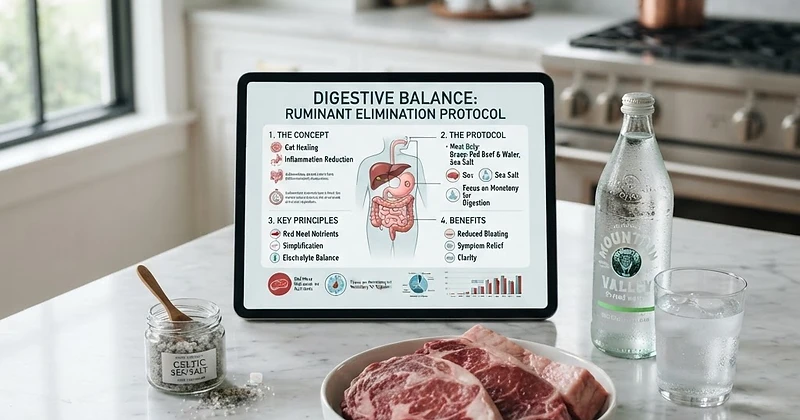
Switching to the Lion Diet—a strict elimination protocol consisting exclusively of ruminant meat, water, and salt—is one of the most profound interventions for chronic inflammation, autoimmune distress, and severe metabolic dysfunction. Yet, despite its ultimate restorative potential, the transition phase frequently catches beginners off guard with one uncomfortable reality: drastic gastrointestinal changes.
Whether you are dealing with sudden, urgent trips to the bathroom or wondering why days pass without a bowel movement, digestive disruptions are among the most common complaints during the initial 30 days. Understanding the biology behind lion diet diarrhea and carnivore diet constipation will remove panic from the equation and empower you to troubleshoot effectively.
The Biology of Lion Diet Digestion: What Really Happens in the Gut
When you transition from a standard mixed diet—rich in fermentable carbohydrates, fiber, and plant antinutrients—to purely ruminant meat and fat, your gastrointestinal tract undergoes a complete metabolic overhaul. This shift affects three major digestive mechanisms:
- Bile Production and Flow: On a high-fat elimination protocol, your liver must dramatically ramp up bile acid synthesis, and your gallbladder must release adequate concentrated bile to emulsify significant fat loads.
- Microbial Turnover: The human gut microbiome rapidly adapts to dietary changes. According to research published in Nature on diet-induced microbiome shifts, removing plant polysaccharides causes fiber-fermenting bacteria to diminish, while bile-tolerant species proliferate within days. As carbohydrate-dependent bacteria die off, transient digestive instability is common.
- Residue Volume Reduction: Meat and animal fats are nearly 100% digestible in the human small intestine, leaving minimal bulk to form waste. Consequently, your baseline stool frequency and volume change dramatically.
Part 1: Why You Have Lion Diet Diarrhea (And How to Fix It)
Watery, oily stools or postprandial urgency typically manifest during weeks 1 through 3. As noted in clinical discussions on carnivore diet diarrhea mechanisms, loose stools in the absence of pathogens are almost always functional rather than pathological.
Key Causes of Diarrhea
- Bile Acid Overflow & Malabsorption: When you consume higher fat quantities than your current digestive capacity can handle, unabsorbed triglycerides and excess free bile acids reach the large intestine. These unabsorbed compounds draw water into the colon via osmotic pressure, producing rapid, liquid stools.
- Rendered and Liquid Fats: Liquid tallow, warm broth fat, and grease straight from the skillet digest differently than firm, cooled fat. Rendered fat empties rapidly from the stomach, overwhelming pancreatic lipase and bile stores in the duodenum.
- Histamine Intolerance: Many newcomers consume ground beef, slow-cooked roasts, or aged beef that are high in biogenic amines. According to Lion Diet clinical guides, individuals with compromised gut barriers or impaired DAO enzyme activity can experience histamine-induced gut hypermotility and loose stools.
- Electrolyte Dumping: Entering ketosis rapidly depletes glycogen reserves, prompting the kidneys to excrete excess water and sodium. Overcompensating with excessive, unmeasured electrolyte salts can produce an osmotic flush.
How to Fix Lion Diet Diarrhea
- Cool Your Fat: Avoid drinking warm beef tallow, suet drippings, or rendered grease. Instead, let your meat rest and eat fats in solid form alongside lean tissue.
- Temporarily Modulate Fat Ratios: While fat adaptation lion diet protocols eventually require high fat intake (typically 70–80% of calories from fat), step down your ratio slightly for 5–7 days. Let your gallbladder catch up before slowly increasing fat content again.
- Opt for Fresh, Unaged Beef: If histamine intolerance is suspected, avoid slow-cooked meats, aged steaks, and bulk-ground beef. Choose freshly butchered cuts or flash-frozen, unaged ground beef.
- Space Out Hydration: Do not chug large quantities of water during or immediately following meals. Excess liquid dilutes hydrochloric acid and digestive enzymes, worsening malabsorption.
- Short-Term Digestive Aids: An ox bile or porcine lipase supplement taken 15 minutes before high-fat meals can provide temporary enzymatic support while your endogenous bile recycling pathway upregulates.
Part 2: Carnivore Diet Constipation vs. Low Residue
Before attempting to "fix" constipation on an all-meat diet, it is critical to determine whether you are genuinely constipated or merely experiencing the normal reality of zero-fiber, high-absorption nutrition.
Low Residue Stool vs. Genuine Constipation
On a standard diet, plant fibers—which the human body cannot chemically digest—form the bulk of fecal matter. When you eliminate fiber entirely, your gut produces far less waste. According to gut adaptation guides on carnivore diet constipation, bowel movements occurring once every 2 to 4 days that pass smoothly and without pain are completely normal. That is low residue, not constipation.