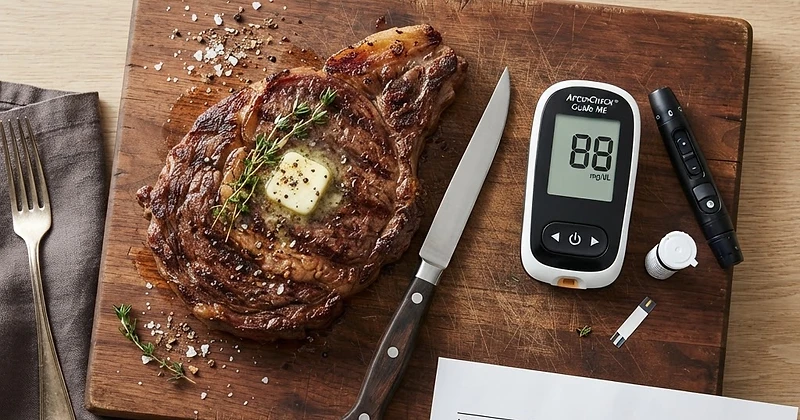
Discover how the carnivore diet addresses the root causes of insulin resistance and metabolic syndrome, lowers HbA1c, and stabilizes blood sugar through species-appropriate nutrition.
We only share products we believe in. Buying through a link may earn us a small commission — thanks for the support. Learn more →
Metabolic dysfunction has reached epidemic proportions across modern societies. At the root of this crisis sits insulin resistance—the primary physiological driver behind type 2 diabetes, obesity, cardiovascular complications, fatty liver, and metabolic syndrome. While conventional nutrition guidelines frequently prescribe carbohydrate moderation alongside frequent whole grains, an increasing number of practitioners and individuals are utilizing an ancestral strategy: the strict zero-carbohydrate, all-meat carnivore diet.
By eliminating dietary carbohydrates, sugars, and inflammatory industrial seed oils, the carnivore approach fundamentally rewrites systemic fuel utilization. But how does removing plant foods reverse carnivore diet insulin resistance? And what should you expect regarding fasting blood glucose, HbA1c, and lipid panels as your body adapts?
Understanding the Biology of Insulin Resistance
Insulin is an anabolic signaling hormone produced by the pancreas. When you consume dietary carbohydrates, they break down into glucose molecules, flooding the bloodstream. The pancreas releases insulin to shuttle that glucose into your liver, muscle, and adipose tissues for energy or storage. Over decades of chronic carbohydrate overconsumption, these target cells become overwhelmed and resistant to insulin's signals.
To overcome this desensitization, the beta cells in the pancreas produce ever-increasing amounts of insulin (hyperinsulinemia) just to maintain normal blood glucose. Eventually, the pancreas cannot keep pace, cellular storage overflows, and circulating blood glucose spikes—resulting in a diagnosis of type 2 diabetes or metabolic syndrome.
How Carnivore Interrupts the Hyperinsulinemic Cycle
The carnivore diet eliminates exogenous glucose sources by prioritizing nutrient-dense animal proteins and fats. Without carbohydrates, postprandial glucose surges disappear. As a direct result:
- Basal Insulin Drops: Without constant dietary carbohydrate stimulation, circulating insulin plummets, removing the primary biochemical block on fat burning (lipolysis).
- Visceral Fat Mobilization: As demonstrated in research on animal-based low-carb interventions, lowering insulin allows ectopic and visceral fat around the liver and pancreas to oxidize rapidly.
- Pancreatic Rest: The pancreatic beta cells are given the physiological respite required to recover secretory dynamics.
What Happens to Fasting Blood Glucose on Carnivore?
Many individuals transitioning to a carnivore diet expect their fasting blood sugar to immediately plunge to historic lows. While average 24-hour glucose decreases significantly, morning fasting readings often reveal an unexpected physiological adaptation: the "Dawn Phenomenon" or adaptive glucose sparing.
Physiological Insulin Resistance vs. Pathological Insulin Resistance
It is vital to distinguish between pathological insulin resistance (caused by cellular energy toxicity, hyperinsulinemia, and ectopic fat) and physiological insulin resistance (often referred to as adaptive glucose sparing). When adapted to a zero-carbohydrate lifestyle:
- Your skeletal muscles spare glucose and switch almost entirely to free fatty acids and ketones for fuel.
- In the early morning, an evolutionary surge in cortisol, glucagon, and growth hormone stimulates hepatic gluconeogenesis—the liver producing just enough glucose to fuel essential tissues like red blood cells and parts of the brain.
- Because your muscles actively refuse this glucose to reserve it for vital organs, a morning carnivore fasting blood glucose reading might sit slightly elevated (often between 90 and 105 mg/dL) despite ultra-low fasting insulin.
This is completely benign when accompanied by low fasting insulin levels (ideally below 5 uIU/mL) and a favorable triglyceride-to-HDL ratio.
Interpreting HbA1c on a Zero-Carb Diet
Hemoglobin A1c (HbA1c) represents the percentage of glycated hemoglobin in your bloodstream over roughly a 90-to-120-day window, reflecting your three-month average blood glucose. In people utilizing the carnivore diet for diabetes, HbA1c typically drops dramatically, often normalizing out of diabetic or prediabetic territory within three to six months.
However, long-term carnivore practitioners occasionally note a minor anomaly: their daily continuous glucose monitors (CGMs) show low, rock-steady glucose levels, yet their laboratory HbA1c remains slightly higher than expected (e.g., 5.4%–5.6%).
The Red Blood Cell Longevity Phenomenon
HbA1c tests assume a standard human red blood cell (RBC) lifespan of 120 days. When systemic inflammation plummets and oxidative stress is minimized through an animal-based diet, red blood cells often survive longer—sometimes 130 to 140 days. Because these cells circulate through the bloodstream longer, they have more time to encounter ambient glucose and undergo natural glycation, artificially skewing the test slightly higher without any underlying metabolic defect. For this reason, assessing fasting insulin, C-peptide, and fructosamine often yields a clearer clinical picture.
Resolving Carnivore Metabolic Syndrome: Key Biomarkers
Metabolic syndrome is clinically identified by a cluster of five conditions: elevated waist circumference, elevated fasting blood glucose, high triglycerides, low HDL cholesterol, and hypertension. The carnivore diet directly targets each of these parameters:
- Triglycerides: Blood triglycerides plunge rapidly, frequently dropping well below 80 mg/dL as dietary carbohydrates are eliminated and the liver clears excess fat.
- HDL Cholesterol: HDL typically rises significantly on a diet rich in bioavailable saturated and monounsaturated animal fats, frequently reaching 60–90+ mg/dL.
- Triglyceride-to-HDL Ratio: A ratio below 1.5 (or ideally below 1.0) is one of the most reliable clinical proxies for systemic insulin sensitivity.
- Blood Pressure: Lowering circulating insulin triggers the kidneys to excrete excess stored sodium and fluid (natriuresis of fasting), rapidly reducing vascular tension and resting blood pressure.
Actionable Blueprint: Healing Insulin Resistance on Carnivore
To safely and effectively reverse insulin resistance using an ancestral, animal-based protocol, implement the following steps:
- Prioritize Fatty Ruminant Meat: Build your meals around ribeyes, chuck roast, 80/20 ground beef, lamb, and bison. Fat is your primary hormonal building block and energetic substrate; protein supplies essential amino acids.
- Eliminate Hidden Carbohydrates: Avoid processed deli meats with added dextrose, sugary seasonings, marinades, and high-lactose dairy products (like milk or large amounts of yogurt) that provoke significant insulin spikes.
- Mind Your Electrolytes: In the initial two to four weeks, the drop in insulin causes rapid electrolyte clearance. Supplement adequately with unrefined salt, potassium, and magnesium to prevent fatigue and headaches.
- Work Alongside Your Prescribing Physician: If you are taking exogenous insulin, sulfonylureas, or blood pressure medications, you must work closely with your physician. Blood glucose and pressure can normalize rapidly, requiring swift medication de-escalation to prevent hypoglycemia or hypotension.
- Order Advanced Metabolic Panels: Instead of relying strictly on standard fasting glucose, request a comprehensive panel every 3–6 months: Fasting Insulin, Fasting Glucose (to calculate your HOMA-IR score), HbA1c, hs-CRP (systemic inflammation), and an advanced lipid panel (Triglycerides, HDL, ApoB).
Final Thoughts
Insulin resistance is not a chronic, irreversible condition destined to worsen with age; it is a metabolic response to sustained nutritional toxicity and energetic overload. By adopting a carnivore diet, you eliminate the dietary inputs driving hyperinsulinemia, clear hepatic and visceral fat, and restore innate metabolic flexibility. Through objective biomarkers—fasting insulin, triglycerides, and steady glycemic trends—the path to metabolic restoration becomes clear and sustainable.
Sources & References
- Bhatt, H., et al. "Reversing 20 years of diabetes using the carnivore diet in India." Cureus / PMC, PMC13007801.
- Brand-Miller, J. C., & Colagiuri, S. "The Carnivore Connection Hypothesis: Revisited." Journal of Obesity, 2012, PMC3253466.
- News-Medical Life Sciences. "Is The Carnivore Diet Healthy?" 2025, news-medical.net.
- Nutrition Network. "The Carnivore Diet: A Game-Changer for Metabolic Health and Chronic Disease." nutrition-network.org.
- GoCarnivore Clinical Guidance. "Carnivore Diet Blood Work: What Are Normal & Optimal Rates?" gocarnivore.com.