Discover the definitive ketovore food list. Learn exactly which low-carb, low-defense plant foods earn a spot alongside meat, eggs, and animal fats on a hybrid diet.
We only share products we believe in. Buying through a link may earn us a small commission — thanks for the support. Learn more →
The carnivore diet offers remarkable benefits for gut healing and autoimmune relief, but many find total plant elimination socially challenging or unnecessarily restrictive long term. Standard keto, meanwhile, often degenerates into a minefield of processed seed oils, artificial sweeteners, and "keto-friendly" junk foods. Enter the ketovore diet: a powerful, animal-forward hybrid that keeps the uncompromising food quality of carnivore while borrowing the practical flexibility of ketogenic living.
The defining question for anyone stepping into this framework is simple: What plant foods are actually allowed? In this guide, we break down the definitive ketovore food list, explore the precise plant additions that qualify, and deliver a practical ketovore grocery list and meal plan to keep you thriving.
The Ketovore Philosophy: Meat-First, Plant-Selective
Ketovore is not simply "keto with extra bacon." It is an animal-based protocol where 85% to 95% of daily calories come from animal sources—beef, lamb, pasture-raised poultry, wild seafood, eggs, and nourishing animal fats. Plant foods do not serve as primary fuel; they act as minor functional accents, culinary enhancers, or tools for long-term dietary sustainability.
As detailed in evolutionary health analyses such as Paleo Pro's Ketovore Guide, traditional keto focuses strictly on macronutrient percentages (often 70% fat, 25% protein, 5% carbs), permitting frankenfoods, seed-oil-fried crisps, and gut-irritating nut flours as long as they fit under the carbohydrate threshold. Ketovore discards modern industrial additives entirely, filtering plant choices through a biological lens: minimal carbohydrates, low antinutrient density, and virtually zero digestive irritation.
What Plant Foods Are Actually Allowed on Ketovore?
When selecting allowed plants on ketovore, the focus centers on plants that are botanically fruits or low-toxicity vegetables with very low net carbohydrate counts and low concentrations of defense chemicals (such as oxalates and lectins).
1. High-Fat and Low-Sugar Fruits
Botanically, fruits house their seeds inside flesh designed by nature to be consumed. Select fruits offer clean micronutrients and fats without delivering a massive glucose spike:
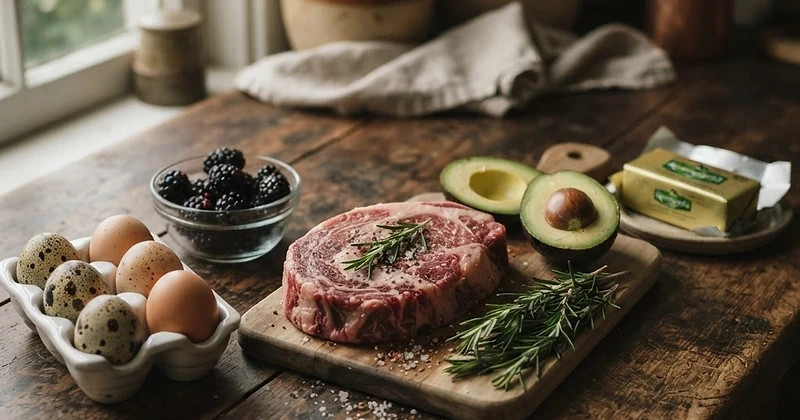
- Avocado: The undisputed staple. Packed with monounsaturated fat, potassium, and magnesium, half an avocado delivers barely 2 grams of net carbs and helps maintain critical electrolyte levels.
- Olives: High in oleic acid and healthy fats; perfect for occasional snacking or pairing with charcuterie.
- Berries (Limited): Blackberries, raspberries, and wild blueberries in strictly measured portions (1/4 to 1/2 cup). They provide polyphenols and natural sweetness with minimal glycemic impact.
- Lemon & Lime Juice: Freshly squeezed juice used strictly as a seasoning for fatty seafood or ribeyes.
2. Low-Oxalate, Low-Starch Vegetables
Unlike standard keto—which frequently leans heavily on raw spinach, almond flour, and industrial brassica salads—ketovore curates vegetables that cause the least intestinal friction:
- Cucumbers & Zucchini: Peeled and cooked squash or raw sliced cucumber (skins and seeds removed for sensitive guts) offer hydration and texture without excessive fiber.
- Fermented Vegetables: Small quantities of unpasteurized sauerkraut or traditional kimchi provide probiotic diversity to assist bile and digestive adaptation during high-fat eating.
- Select Mushrooms: Button, cremini, or portobello sautéed in tallow or butter offer savory umami with negligible carbs.
3. Herbs, Pure Spices, and Clean Seasonings
Animal foods shine on their own, but herbs and simple seasonings keep meals enjoyable for life:
- Fresh and Dried Herbs: Rosemary, thyme, oregano, basil, and parsley.
- Mineral-Rich Salt: Unrefined sea salt or pink rock salt (essential for fluid balance in ketosis).
- Single-Origin Spices: Fresh cracked black pepper, garlic powder, and smoked paprika (used sparingly).
4. Functional Plant Beverages
- Black Coffee & Espresso: Unsweetened, enjoyed black or blended with heavy cream, butter, or grass-fed ghee (see Dr. Berg's Clinical Overview of Ketovore).
- Single-Ingredient Teas: Plain green, black, or herbal infusions.
Plants That Remain Strictly Excluded
To preserve metabolic flexibility and gut integrity, several categories of plant foods remain completely off-limits:
- Grains and Pseudograins: Wheat, corn, rice, oats, and quinoa.
- Legumes and Beans: Peanuts, soy, black beans, lentils, and chickpeas.
- Refined Seed Oils: Canola, soybean, corn, cottonseed, and sunflower oils.
- Starchy Tubers: Potatoes, sweet potatoes, yams, and parsnips.
- High-Oxalate Greens & Nuts: Raw spinach, swiss chard, almonds, and cashew butter.
- Refined Sugars & Sweeteners: Agave, cane sugar, high-fructose corn syrup, and synthetic sugar alcohols.
The Ultimate Ketovore Grocery List
Organize your trips to the store or local butcher around this foundational ketovore grocery list:
The Animal Foundation (85-95% of Cart)
- Ruminant Meats: Ribeye, ground beef (80/20 or 73/27), chuck roast, lamb chops, brisket.
- Pork & Poultry: Pasture-raised bacon, pork belly, bone-in chicken thighs, duck breast.
- Seafood: Wild sockeye salmon, sardines, mackerel, shrimp, oysters.
- Fats: Grass-fed butter, beef tallow, lard, duck fat, ghee.
- Pastured Eggs: Whole eggs, duck eggs, and yolk additions.
- Dairy (Optional/Low-Lactose): Heavy whipping cream, aged cheddar, parmesan, pecorino romano.
The Plant Periphery (5-15% of Cart)
- 2–3 Hass avocados
- 1 pint fresh organic blackberries or raspberries
- 1 jar raw, naturally fermented sauerkraut
- Fresh lemons for grilling fish
- Fresh sprigs of rosemary and thyme
- High-grade unrefined sea salt
A 3-Day Ketovore Diet Meal Plan
Here is how a balanced ketovore diet meal plan looks on a plate—simple, deeply satiating, and free from macro obsession, as outlined in community protocols on GoCarnivore's Ketovore Guide and The Primal's Meal Plans.
Day 1
- Breakfast: 3 eggs scrambled in grass-fed butter, 3 strips of thick-cut pasture-raised bacon, 1/2 sliced avocado dusted with sea salt.
- Lunch: Two 1/4 lb beef burger patties topped with melted aged cheddar and 1 tablespoon of raw sauerkraut.
- Dinner: 12 oz grilled ribeye basted with rosemary-garlic butter, paired with grilled zucchini medallions cooked in tallow.
Day 2
- Breakfast: 3 sunny-side-up eggs fried in tallow alongside 4 oz pork sausage patties; black coffee with a splash of heavy cream.
- Lunch: Canned wild sardines packed in water, paired with hard-boiled eggs and a small handful of green olives.
- Dinner: Wild-caught salmon fillet pan-seared in ghee with fresh lemon juice; small bowl of fresh raspberries (1/4 cup) for dessert.
Day 3
- Breakfast: Omelet made with 3 eggs, diced leftover beef brisket, and pecorino romano cheese.
- Lunch: Slow-cooked chuck roast served over bone broth reduction with sautéed button mushrooms.
- Dinner: Pan-seared lamb chops with garlic compound butter, alongside thinly sliced cucumber seasoned with salt and extra-virgin olive oil.
Transition Tips for Long-Term Success
Transitioning to an animal-focused framework shifts your hydration and electrolyte dynamics quickly. Follow these guidelines to bypass the classic "keto flu":
- Salt Generously: When carbohydrates drop below 30–50 grams per day, the kidneys release sodium rapidly. Salt your steaks and eggs aggressively to prevent head tension and fatigue.
- Prioritize Ruminant Fat: Do not swap dietary carbs for lean protein alone. Ensure your ground beef is at least 20% fat and cook your cuts in natural animal fats to keep ketone production high.
- Listen to Your Digestion: If even minimal plants produce bloating, gas, or joint discomfort, drop down to pure carnivore for two to three weeks before testing single items like avocado one at a time.
Sources & References