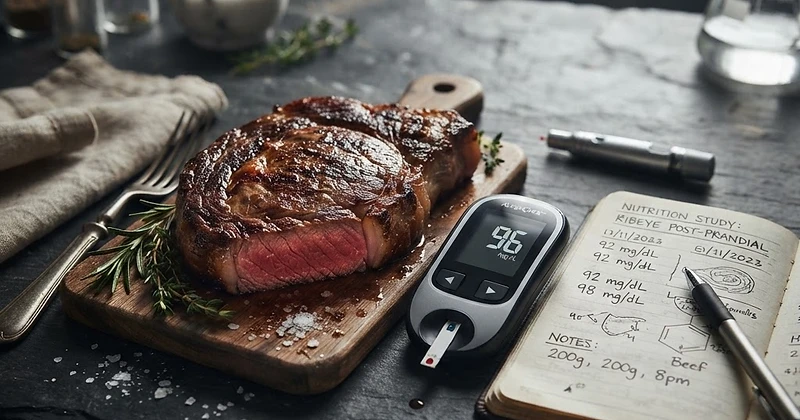
Waking up to high morning glucose on a strict ruminant-meat carnivore diet can be alarming. Discover the science behind adaptive glucose sparing and why elevated fasting blood sugar is often a normal physiological shift.
We only share products we believe in. Buying through a link may earn us a small commission — thanks for the support. Learn more →
You committed to the strictest elimination protocol on the planet: the Lion Diet. For weeks, your daily intake consists solely of ruminant meat (predominantly beef or lamb), salt, and water. Brain fog has lifted, joint aches are diminishing, and digestion feels effortless. Yet, when you prick your finger upon waking, your blood glucose monitor flashes an unexpected number: 105, 115, or even 125 mg/dL.
How can your blood glucose be elevated when your carbohydrate intake has been exactly zero grams? The natural instinct for many keto and carnivore practitioners is panic: Am I developing prediabetes from eating beef? Is gluconeogenesis out of control?
In reality, this metric is rarely indicative of pathological metabolic dysfunction. Instead, it is typically the result of two interconnected, healthy adaptations: adaptive glucose sparing (often referred to as physiological insulin resistance) and an accentuated dawn phenomenon.
The Core Mechanism: What Is Physiological Insulin Resistance?
In standard medical parlance, "insulin resistance" is synonymous with pathological metabolic syndrome—a state where muscle, fat, and liver cells become deaf to insulin due to chronic nutrient overload and hyperinsulinemia. In that context, glucose cannot efficiently enter tissues, forcing the pancreas to pump out ever-increasing amounts of insulin.
On a strict zero-carb regimen like the Lion Diet, an entirely different, benign process emerges: carnivore physiological insulin resistance, accurately termed adaptive glucose sparing.
When your body becomes deeply fat-adapted, your skeletal muscles switch their primary fuel source to fatty acids and ketones. Because your muscles are content burning lipids, they temporarily downregulate their sensitivity to insulin and refuse to soak up circulating glucose. This is not broken metabolic machinery; it is an intelligent conservation mechanism.
Certain tissues—including red blood cells, parts of the brain, and the renal medulla—require glucose to function because they lack mitochondria or the biochemical pathways to run on ketones alone. By rendering peripheral muscle tissue selectively resistant to glucose uptake, your body preserves the small pool of endogenous glucose (manufactured in the liver via gluconeogenesis) strictly for the vital organs that genuinely need it.
The Dawn Phenomenon on a Zero-Carb Elimination Diet
The second piece of the puzzle is the dawn phenomenon, a natural circadian process mediated by counter-regulatory hormones.
Between 3:00 a.m. and 8:00 a.m., your endocrine system orchestrates a wake-up surge by releasing:
- Cortisol: Signals the liver to initiate hepatic glucose production (glycogenolysis and gluconeogenesis).
- Growth Hormone: Supports cellular repair and temporarily suppresses glucose uptake.
- Glucagon and Adrenaline: Mobilize stored lipids and stimulate glucose release into the blood.
On a standard high-carbohydrate diet, the pancreas counters this morning hepatic surge with an equally vigorous pulse of insulin, keeping fasting glucose within a tighter nominal range. But on an adaptive glucose sparing beef only diet, fasting baseline insulin levels are exceptionally low. Without a massive insulin counter-wave, the glucose produced by the liver remains in circulation longer, producing a transient spike on your morning glucometer.
Pathological vs. Physiological Insulin Resistance: How to Spot the Difference
Differentiating between harmful metabolic dysfunction and harmless adaptive glucose sparing comes down to context and comprehensive blood markers. A single fasting glucose reading in the morning provides an incomplete view of systemic metabolic health.
| Marker | Pathological Insulin Resistance | Physiological Glucose Sparing (Lion Diet) |
|---|
| Fasting Insulin | High (>10–25+ µIU/mL) | Extremely Low (<2–5 µIU/mL) |
| Post-Prandial Glucose | Sustained spikes after meals | Flatline; little change after a beef meal |
| HbA1c | Elevated (Pre-diabetes/Diabetes range) | Normal to low (often 4.8%–5.4%) |
| Triglycerides | Elevated (>150 mg/dL) | Low (<70 mg/dL) |
| Energy & Satiety | Afternoon crashes, persistent hunger | Stable, sustained all-day energy |
What About the Oral Glucose Tolerance Test (OGTT)?
A classic clinical mistake occurs when a fat-adapted carnivore undergoes an Oral Glucose Tolerance Test (OGTT) without dietary preparation. Because muscle tissue is in glucose-sparing mode and the pancreas has down-regulated acute-phase insulin output, drinking a 75-gram bolus of pure liquid glucose will cause blood sugar to skyrocket, resulting in a false-positive diabetes diagnosis.
As metabolic researchers and clinicians point out, this state is entirely reversible. Re-introducing 100 to 150 grams of carbohydrates daily for just three days restores baseline enzymatic machinery, normalizes acute insulin response, and results in a standard OGTT outcome.
Practical Action Steps for Lion Dieters
If you encounter high morning blood sugar on a lion diet, evaluate your overall metabolic landscape using these clinical benchmarks and lifestyle strategies:
1. Run a Complete Metabolic Panel
Never rely exclusively on a morning finger-prick test. Request the following blood tests from your physician:
- Fasting Serum Insulin: To calculate your HOMA-IR (Homeostatic Model Assessment for Insulin Resistance). If glucose is 105 mg/dL but fasting insulin is 3 µIU/mL, your HOMA-IR is ~0.8—indicating exceptional insulin sensitivity.
- HbA1c: Reflects your true 90-day glycemic average, unskewed by early-morning cortisol bursts.
- Triglyceride-to-HDL Ratio: A ratio near or below 1.0 is an outstanding proxy for systemic vascular and metabolic health.
2. Track Continuous Glycemic Patterns (CGM)
If feasible, wear a Continuous Glucose Monitor (CGM) for 14 days. Observe what occurs two hours after your first beef meal. In physiological insulin resistance, post-prandial readings remain remarkably stable and level off throughout the afternoon and evening, whereas pathological insulin resistance shows sustained elevations throughout the entire day.
3. Shift Dinner Timing
Eating large, fatty steaks late in the evening prolongs digestive processing and keeps hepatic nutrient turnover elevated into the night. Moving your final meal 3 to 4 hours before bedtime often dampens the magnitude of the dawn cortisol-glucose release.
4. Add Light Morning Movement
Engage in a 15-to-20-minute brisk walk shortly after waking. Muscular contraction independently stimulates non-insulin-dependent GLUT4 translocation, allowing muscle cells to clear hepatic glucose from the bloodstream rapidly without requiring insulin intervention.
The Bottom Line
Waking up to slightly elevated fasting glucose when eating exclusively beef, salt, and water is generally not a warning sign of pathology. It is the signature of an adaptable, fat-fueled body conserving essential resources for the tissues that rely on them. So long as your fasting insulin remains low, your post-prandial levels remain flat, and your subjective energy is high, your metabolism is doing precisely what nature engineered it to do.
Sources & References