Learn how to safely break an extended fast on the strict Lion Diet without gut distress, nausea, or rapid-onset diarrhea. Step-by-step refeeding protocols, physiology, and expert tips.
We only share products we believe in. Buying through a link may earn us a small commission — thanks for the support. Learn more →
Extended fasting—abstaining from caloric intake for 36, 48, 72 hours, or longer—has become a cornerstone strategy among therapeutic carnivore practitioners. When paired with the Lion Diet (a hyper-elimination protocol restricted entirely to ruminant meat, salt, and water), prolonged fasts can catalyze deep autophagy, reset metabolic signaling, and dramatically calm systemic autoimmune flares. However, the most critical window of any prolonged fast is not the fasting period itself; it is the refeeding phase.
Failing to transition out of an extended fast properly can trigger severe post fast digestive issues: painful stomach cramping, explosive osmotic diarrhea, nausea, and intense lethargy. Furthermore, the physiological constraints of the Lion Diet eliminate traditional fast-breaking staples like watery fruit, fermented yogurt, or vegetable purees. You must rely solely on ruminant nutrition.
Understanding how to break a fast carnivore style—specifically within the strict parameters of the Lion Diet—requires working directly with your body’s down-regulated digestive machinery. Here is your definitive, evidence-informed guide to reintroducing nourishment without gut distress.
The Refeeding Physiology: Why Your Gut Is Vulnerable Post-Fast
During an extended fast, profound biological down-regulations take place inside the gastrointestinal (GI) tract:
- Digestive Secretions Downshift: Hydrochloric acid (HCl) production in the parietal cells slows down to conserve resources, while pancreatic digestive enzymes (like proteases and lipases) drop to basal maintenance levels.
- Bile Concentration and Storage: The liver reduces new bile acid production, while the gallbladder remains dormant because no incoming dietary fats have stimulated cholecystokinin (CCK) release.
- Atrophy of Gut Microvilli: The brush border enzymes of the small intestine reduce their surface area slightly when not actively absorbing nutrients, leaving the mucosa sensitive to osmotic shocks.
- Shift to Ketone and Fat Oxidation: Your intracellular electrolyte balance shifts. Potassium, magnesium, and phosphorus move out of cells to sustain circulating blood levels.
If you break a 72-hour fast by immediately devouring a hot, 16-ounce seared ribeye drenched in liquid rendered beef tallow, your dormant digestive organs will be overwhelmed. The lack of ready enzymes and bile causes massive quantities of undigested fat and intact proteins to rush into the lower intestine. This induces rapid water secretion into the bowel lumen, culminating in sudden cramping and severe diarrhea—often referred to in the community as the dreaded "refeeding disaster."
What About Refeeding Syndrome on a Beef Diet?
A frequent concern during extended refeeding is refeeding syndrome beef diet dynamics. Historically defined in clinical settings, refeeding syndrome is a potentially fatal condition triggered when severely malnourished individuals receive rapid carbohydrate infusions. Carbohydrates cause a massive spike in insulin, which pushes serum phosphorus, potassium, and magnesium into the cells, resulting in life-threatening hypophosphatemia, arrhythmias, and neuromuscular collapse (Cleveland Clinic).
Because the Lion Diet contains zero carbohydrates, the dramatic insulin surge responsible for classic refeeding syndrome is significantly blunted. However, non-diabetic insulin surges still occur to a smaller degree from dietary protein. More importantly, unmonitored electrolyte depletion followed by heavy protein metabolism places immediate demands on intracellular phosphorus. If you have completed an extended fast (particularly beyond 5 to 7 days), gradual caloric progression and proactive electrolyte replenishment remain non-negotiable safety priorities.
The 3-Phase Lion Diet Refeeding Protocol
Whether you timed your fast using Natural Carnivore's built-in fasting timer or are simply listening to internal hunger cues, navigating what to eat after fasting requires a staged, graduated schedule over 12 to 24 hours.
Phase 1: The Wake-Up Broth (Hour 0)
Never start with dense solid muscle meat. The goal of your first meal is purely to signal the stomach to begin secreting gastric acid and awaken the gallbladder without demanding heavy mechanical digestion.
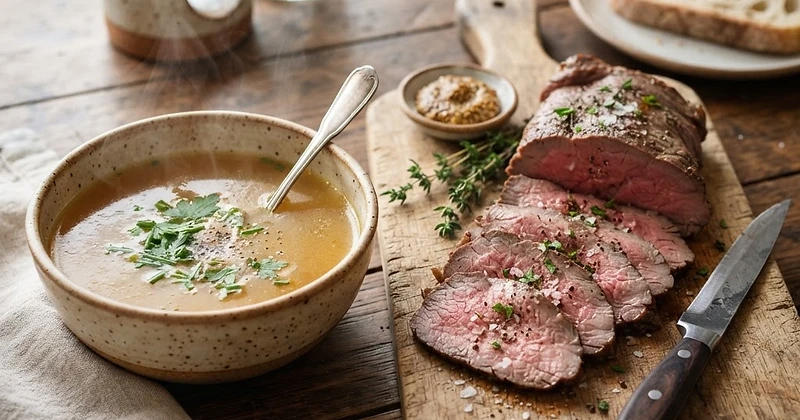
- Menu: 6 to 8 ounces of warm, homemade beef or lamb bone broth.
- Guidelines: Skim off excess rendered surface fat before consuming. Pure liquid fat post-fast frequently triggers an immediate laxative effect. Add a generous pinch of unrefined sea salt or pure mineral salt.
- Action: Sip the broth slowly over 20 to 30 minutes. Do not chug it. Wait 60 to 90 minutes before introducing any solid food.
Phase 2: The Soft Inoculation (Hour 1.5 to 2)
Once your stomach confirms that broth sat comfortably without cramping or nausea, introduce a minimal amount of soft, easily denatured protein with moderate fat.
- Menu: 3 to 4 ounces of finely ground ruminant meat (85/15 ground beef or lamb), gently cooked, or a few ounces of very tender, slow-braised beef shank or chuck roast that flakes apart effortlessly.
- Fat Control: Pour off loose liquid rendered fat. While saturated animal fats are vital on the Lion Diet, hot liquid grease is the primary cause of immediate post-fast digestive failure. Stick to the fat bound within the meat tissue.
- Chewing: Chew every bite thoroughly. Since mechanical digestion in the mouth reduces the biochemical load on stomach acid, deliberate mastication is essential.
Phase 3: The Full Return (Hour 4 to 6+)
If you experience no gut turbulence, bloating, or loose stools, your system is fully back online. You are now prepared to return to your normal Lion Diet meals.
- Menu: A standard portion of ribeye, striploin, or lamb chops salted to taste.
- Portioning: Eat until comfortably satiated, not to the point of gorging. Post-fast leptin and ghrelin signals may take 20 minutes to equalize; eating slowly prevents postprandial distress.
Key Practical Guidelines to Prevent Post-Fast Issues
To ensure a frictionless re-entry back into nutritional ketosis on ruminant nutrition, adhere to these three rules:
- Separate Water from Meals: Do not drink large volumes of cold water 30 minutes before, during, or after your refeeding meals. Flooding the stomach with water dilutes your recovering concentration of gastric acid, hindering protein breakdown.
- Temperature Matters: Avoid cold, gelatinous leftovers straight from the refrigerator. Warm foods relax the stomach lining, stimulate healthy esophageal and gastric motility, and encourage smoother digestion.
- Prioritize Salt and Hydration Beforehand: Ensure your electrolytes are stable several hours before breaking the fast. Taking salt directly alongside a massive protein load can create high osmotic pressure in the intestines.
Frequently Asked Questions
How long should my refeeding window last?
A reliable rule of thumb is to dedicate approximately one-third to one-half of your fasting duration to deliberate refeeding. For a 36-hour fast, a 6-to-8-hour gentle transition is usually sufficient. For a 72-hour fast or longer, spend a full 24 to 36 hours stepping up portion sizes and fat density.
What if I get sudden diarrhea after my first meal?
If loose stools occur, you likely consumed too much rendered liquid fat too quickly or ate beyond your stomach's immediate enzymatic capacity. Return to small sips of salted broth, pause solid meals for 3 to 4 hours, and ensure your next meat portion is leaner and consumed warm rather than hot and oily.
Sources & References
- Mehanna, H. M., Moledina, J., & Travis, J. (2008). Refeeding syndrome: what it is, and how to prevent and treat it. BMJ (Clinical research ed.), 336(7659), 1495–1498. PMC2440847
- Cleveland Clinic. (2023). Refeeding Syndrome: Symptoms, Treatment & Risk Factors. Cleveland Clinic Health Library
- Crook, M. A., Hally, V., & Panteli, J. V. (2001). The importance of the refeeding syndrome. Nutrition, 17(7-8), 632-637.