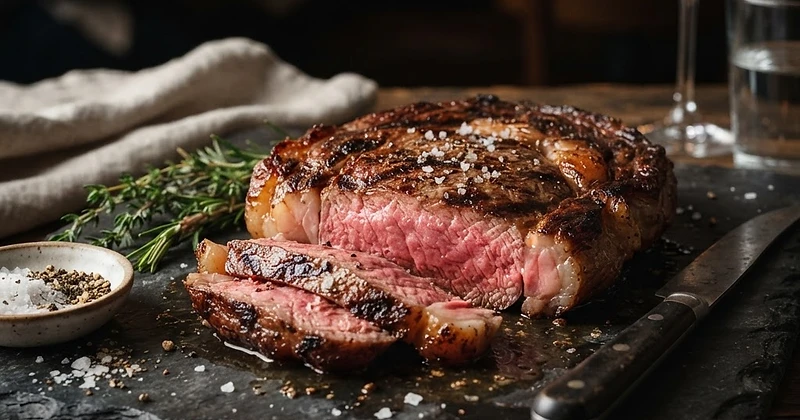
Lion Diet and Intermittent Fasting: Is OMAD Safe on Just Beef and Salt?
← All articles
FastingLion

Lion Diet and Intermittent Fasting: Is OMAD Safe on Just Beef and Salt?

Discover whether combining the Lion Diet with One Meal A Day (OMAD) fasting is safe, how to listen to natural hunger cues, and best practices for success.

By Editorial Team

We only share products we believe in. Buying through a link may earn us a small commission — thanks for the support. Learn more →

The Lion Diet is widely recognized as the ultimate elimination protocol. By paring your daily intake down strictly to ruminant meat, salt, and water, it strips away inflammatory plant antinutrients, allergens, and gut irritants. For many striving for metabolic repair and deep autoimmune relief, pairing this approach with intermittent fasting—specifically One Meal A Day (OMAD)—feels like a natural progression.

However, condensing an entire day’s worth of ruminant nutrition into a single sitting is not without challenges. In this guide, we dive deep into lion diet intermittent fasting, examine the physiological realities of carnivore OMAD, and determine whether subsisting on just beef and salt once every 24 hours is truly safe and optimal for your health goals.

Understanding the Synergies: Lion Diet Meets Intermittent Fasting

Both intermittent fasting and the Lion Diet work toward a common metabolic state: ketosis and deep systemic downregulation of inflammation. Fasting depletes liver glycogen stores, lowering insulin levels and permitting your body to access stored adipose tissue for fuel. Similarly, consuming only ruminant meat and salt forces your physiology to adapt completely to fat oxidation.

When combined, followers often experience profound simplicity:

  • Digestive Resting Periods: Without fiber, plant compounds, or continuous meals, the digestive tract spends hours in complete rest, aiding mucosal healing and intestinal wall repair.
  • Autophagy and Cellular Renewal: Extended daily fasting windows encourage cellular cleanup mechanisms alongside the deep elimination benefits of an all-beef diet.
  • Mental Clarity: With stable blood sugars and ketones serving as steady fuel, the post-meal brain fog typical of high-carbohydrate eating completely disappears.

Is OMAD on Just Beef and Salt Safe?

The short answer: Yes, it can be safe, but it is not universally optimal for everyone, nor is it recommended right out of the gate. Eating only once a day while adhering to the strict Lion Diet comes with unique physiological hurdles that require careful management.

1. The Risk of Chronic Undereating

Beef is exceptionally satiating. Ruminant protein and fat trigger the release of peptide YY (PYY) and cholecystokinin (CCK), two potent gut hormones signaling complete fullness. In an OMAD context, many people find it physically uncomfortable to consume an entire day’s energetic requirements—often 2,000 to 3,000 calories of dense meat—in a single 1- to 2-hour window.

Over weeks or months, chronically undereating on a carnivore OMAD schedule can suppress thyroid function (reducing T4 to T3 conversion), elevate cortisol, stall fat loss, and lead to unwanted lean muscle loss.

2. Protein Absorption and Muscle Protein Synthesis (MPS)

While the human digestive system is capable of absorbing large quantities of amino acids over several hours, maximal muscle protein synthesis is typically stimulated intermittently throughout the day. Eating only once daily means fewer total MPS spikes, which may prove suboptimal for hard-training athletes or individuals attempting to build significant muscle mass.

3. Gastric Capacity and Bile Production

Ruminant meat requires adequate stomach acid (hydrochloric acid) and bile from the liver and gallbladder to break down fats properly. Forcing 2 pounds of fatty ribeye down in one sitting can overwhelm the stomach of someone who has not yet ramped up bile production, leading to post-meal lethargy, nausea, or rapid gastrointestinal distress.

Mastering Lion Diet Hunger Cues: Natural vs. Forced Fasting

One of the most dangerous mistakes beginners make is forcing a strict fasting window by the clock. On a standard American diet, hunger is driven by sharp blood sugar swings and ghrelin spikes. On a strict ruminant protocol, true metabolic hunger looks entirely different.

Understanding lion diet hunger cues requires untangling habitual cravings from cellular requirements:

Join the Community

Create your free account to access personalized targets, daily tracking, and lifestyle guidance tailored to your diet path.

Sign Up Free
  • Habitual/Boredom Hunger: You find yourself glancing at the clock, thinking about food because it is noon, or wanting to chew out of boredom.
  • True Physiological Hunger: You experience a calm, persistent drop in energy, a cool or hollow feeling in your midsection, and cold plain beef fat suddenly sounds deeply appetizing.

If you are not hungry at mealtime, do not force yourself to eat. Conversely, if your body clearly demands fuel outside your scheduled OMAD window, do not starve yourself in the name of rigid discipline. Let fasting occur naturally as a side effect of nutrient satiety, not an arbitrary rule.

Designing an Effective Lion Diet Fasting Protocol

If you choose to integrate lion diet fasting protocols, a progressive and structured transition ensures your hormones, digestion, and energy levels remain completely protected.

Phase 1: Adaptation (Weeks 1 to 4)

Do not attempt OMAD immediately upon starting the Lion Diet. Focus entirely on adapting to a zero-carb, meat-only regimen. Eat fatty cuts of beef, lamb, or bison to satiety two or three times a day. Season generously with natural sea salt and drink clean water.

Phase 2: Gradual Window Compression (16:8 or 18:6)

Once you are fully fat-adapted, your hunger will naturally taper off. Transition into a 16-hour fast with an 8-hour eating window (two meals per day). For example, eat a nutrient-dense ribeye meal at 12:00 PM and your second meal at 6:00 PM.

Phase 3: Cycling OMAD Responsibly

Instead of doing OMAD every single day, consider using it as an intuitive tool 2 to 3 days per week. On your OMAD days, focus on highly caloric, fatty cuts like 70/30 ground beef, beef short ribs, or ribeye steaks along with extra suet or tallow to ensure adequate caloric intake in that single setting.

Hydration and Electrolytes: The Critical Variable

Without dietary carbohydrates, your kidneys naturally excrete sodium at an accelerated rate—an effect dramatically amplified during an extended fast. Headaches, lightheadedness, heart palpitations, or muscle cramps on a Lion Diet OMAD schedule are almost always signs of sodium depletion rather than caloric starvation.

Ensure you are liberally salting your food to taste. Keep coarse salt flakes on hand throughout your fasting hours and dissolve a pinch under your tongue with fresh spring water whenever fatigue creeps in.

Red Flags: When to Stop Carnivore OMAD

While fasting can be a potent healing catalyst, it is also a biological stressor. Cease your OMAD experiment and return to a multi-meal schedule if you notice:

  • Persistent insomnia or waking up with elevated heart rates at 3:00 AM
  • Drastic energy crashes in the late afternoon
  • Unintended rapid muscle loss or ongoing workout stagnation
  • Cold intolerance (unusually cold hands and feet throughout the day)
  • Loss of healthy menstrual cycles in women

The Bottom Line

Intermittent fasting and the Lion Diet can work in harmony, but safety relies entirely on getting adequate calories, respecting your digestive capacity, and listening to authentic lion diet hunger cues. Do not force OMAD as a badge of honor. Treat it as an intuitive tool to deploy when your body simply doesn't require food, and always prioritize total nutrient density over fasting duration.

Sources & References

Join the Community

Create your free account to access personalized targets, daily tracking, and lifestyle guidance tailored to your diet path.

Sign Up Free

We use cookies and similar technologies to operate the site and improve your experience. By continuing, you agree to our use of non-essential cookies. See our Privacy Policy.