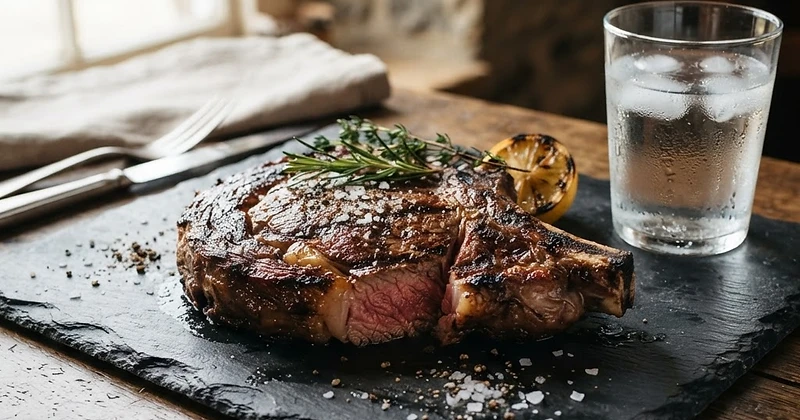
Discover how combining OMAD with the strict Lion Diet optimizes fat adaptation, mental clarity, and gut rest while ensuring you hit your caloric and electrolyte needs.
We only share products we believe in. Buying through a link may earn us a small commission — thanks for the support. Learn more →
The Lion Diet stands as the ultimate elimination protocol in the ancestral health world. Popularized by Mikhaila Peterson, this ultra-strict variation of the carnivore diet reduces food intake exclusively to ruminant animal meat (such as beef, lamb, and bison), salt, and water. Many practitioners naturally find their hunger signaling transformed once they eliminate inflammatory plant compounds and carbohydrates. This often leads to a practical question: Can you combine intermittent fasting or One Meal A Day (OMAD) with the Lion Diet?
Combining lion diet intermittent fasting is not only feasible, but for many seasoned carnivores, it happens spontaneously. However, condensing your entire daily nutritional intake into a single eating window of beef and water requires deliberate planning. Here is your definitive guide to mastering lion diet OMAD safely, sustainably, and effectively.
The Physiology of Fasting on the Lion Diet
To understand why intermittent fasting and the Lion Diet pair naturally, it helps to examine metabolic physiology. On a standard mixed diet, frequent hunger pangs are driven largely by rapid swings in blood glucose and insulin. When you consume only fatty ruminant meat, blood sugar stabilizes and baseline insulin drops, prompting the liver to enter consistent ketosis.
Because dietary fat and protein stimulate strong satiety hormones (such as cholecystokinin and peptide YY) while minimizing the spikes in ghrelin caused by refined carbohydrates, your appetite naturally downregulates. As highlighted in research on the Lion Diet framework, abstaining from food for 16 to 23 hours becomes surprisingly effortless once your body becomes fully fat-adapted.
Potential Synergies of Lion Diet OMAD
- Maximized Digestive Rest: Eliminating plant fiber and antinutrients already removes major gut irritants. Restricting your intake to a single 1- to 2-hour window gives the gastrointestinal tract an extended period of rest to facilitate repair.
- Deep Fat Adaptation: Extended periods without incoming fuel require the body to rely entirely on stored body fat and dietary tallow, deepening metabolic flexibility.
- Simplicity and Mental Focus: Eating once per day completely eliminates food preparation anxiety and mid-day energy crashes, freeing up cognitive energy.
Understanding Lion Diet Meal Timing: From 16/8 to OMAD
If you are transitioning to fasting on carnivore diet protocols, jumping straight into OMAD can backfire. Compressing 2,000 to 3,000 calories of dense beef into a single sitting requires significant enzymatic and stomach acid capacity.
Phase 1: 16/8 or 18/6 (Two Meals a Day)
Begin by restricting your eating to an 8-hour window (e.g., eating at 12:00 PM and 6:00 PM). This allows you to split your meat intake into two moderate portions—such as 1 lb of ribeye for lunch and 1 lb of ground beef for dinner. Practice this until energy levels and bowel movements stabilize.
Phase 2: Transitioning to 20/4 or OMAD (23/1)
Once two meals feel effortless, shorten your window to 4 hours or switch to pure OMAD. In a true OMAD schedule, you eat one large meal over a 60- to 90-minute window each day. When timing this meal, listen to your lifestyle:
- Late Afternoon / Early Evening: Most people prefer eating between 4:00 PM and 7:00 PM. This allows you to relax, cook without rushing, and enter sleep well-satiated. Ensure you finish eating at least 2 to 3 hours before bed to prevent elevated body temperature from disrupting deep sleep.
- Midday: Better for individuals who suffer from acid reflux or find heavy digestion interferes with evening rest.
Structuring the Ultimate Lion Diet OMAD Meal
The single greatest risk of lion diet meal timing with OMAD is unintentional under-eating. Because ruminant meat is extremely satiating, you may feel full after just 12 to 14 ounces of steak—leaving you in a severe caloric deficit that, over time, can suppress thyroid function and cause fatigue.
1. Prioritize Fat-to-Protein Ratios
On a zero-carb, ruminant-only protocol, fat is your primary energy substrate. Lean cuts like sirloin or eye of round are insufficient for OMAD. Aim for an approximate 1:1 to 2:1 fat-to-protein ratio in grams. Choose cuts such as:
- Prime or choice ribeye steaks
- 70/30 or 75/25 ground beef
- Braised beef short ribs or lamb shoulder
- Added beef kidney suet, tallow, or marrow alongside leaner muscle cuts
2. Ensure Adequate Volume and Micronutrients
Depending on your stature, sex, and activity levels, an active adult typically requires 1.5 to 2.5 pounds of fatty ruminant meat per day. If eating that much in one sitting feels physically overwhelming, do not force it; revert to a 2MAD (Two Meals a Day) approach until your stomach adapts.
Hydration and Electrolyte Management During the Fast
Fasting triggers the kidneys to rapidly excrete sodium and water, a phenomenon that is magnified on a zero-carbohydrate regimen. Proper hydration is critical to avoiding headaches, lethargy, muscle cramps, and the "keto flu."
- Salt to Taste: In your fasting window, sip plain water and consider dissolving a pinch of natural salt (such as Redmond Real Salt or Celtic sea salt) on your tongue if you feel lightheaded.
- Avoid Chugging Water with Your Meal: To maximize digestion of dense proteins and saturated fats, avoid drinking massive quantities of water 30 minutes before, during, and 60 minutes after your meal. Diluting stomach acid can lead to bloating, reflux, and loose stools.
When to Avoid Combining OMAD with the Lion Diet
While powerful, combining two intensive interventions is not suitable for everyone. Reconsider OMAD if you fall into these categories:
- Active Adrenal or Hormonal Fatigue: If you are struggling with severe burnout, chronic sleep disturbances, or hypothalamic amenorrhea, aggressive fasting can act as an added stressor. Multiple smaller meals may be preferable.
- Intense Hypertrophy Goals: As noted in athletic literature regarding protein distribution and muscle protein synthesis, spreading protein across two to three meals stimulates muscle building pathways more evenly throughout the day compared to a single bolus.
- New to the Carnivore Lifestyle: Never combine OMAD with the Lion Diet on day one. Spend at least 30 to 60 days adapting to ruminant meat first before experimenting with compressed eating windows.
Practical Action Plan
- Step 1: Achieve full fat adaptation on ruminant meat, salt, and water for at least 3 to 4 weeks eating whenever hungry.
- Step 2: Naturally compress your window to two meals per day (16/8). Notice when your hunger cues occur.
- Step 3: Transition to OMAD 2 to 3 days per week to test your digestive capacity and energy levels.
- Step 4: Track your weekly weight, energy, and sleep. If you experience lingering fatigue or muscle weakness, widen your eating window and increase your daily intake of animal fats.
Sources & References